

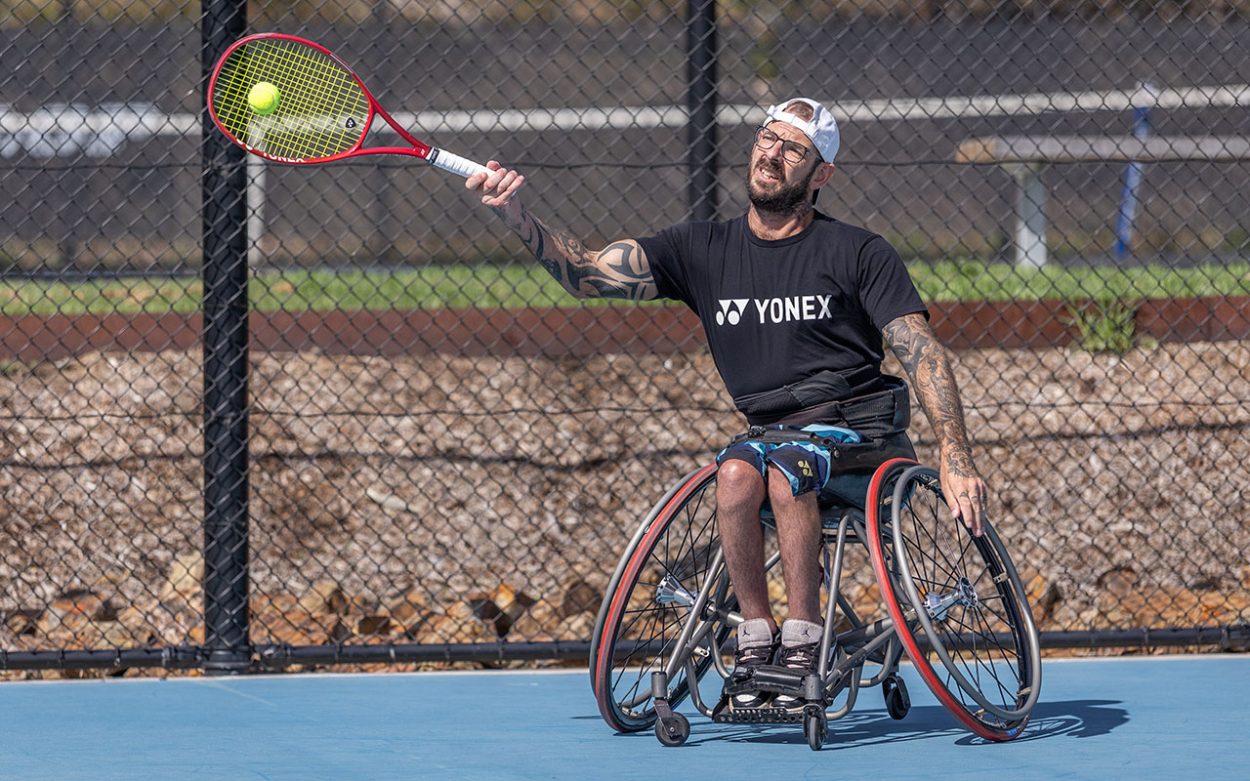
Paralympic gold medallist Heath Davidson has one of the most remarkable comeback stories in Australian sport. After abandoning wheelchair tennis for 11 years, he returned to the court at the age of 28 and won gold at the Rio Paralympics just 11 months later.
“I started hitting tennis balls again in November of 2015,” the Frankston-based athlete says. “…and if you fast forward 11 months, I won a gold medal with Dylan Alcott in 2016.”
Heath and his long-time friend Dylan Alcott defeated the three-time reigning champions from the United States to claim Australia’s first gold medal in quad doubles wheelchair tennis. He has since won silver at Tokyo 2020 and become a four-time Australian Open doubles champion. But the path to Rio was anything but straightforward.
At just five months of age, Heath contracted viral transverse myelitis, a spinal cord inflammation that paralysed his legs. He started playing wheelchair tennis at 14. “I was an extremely overweight kid, I didn’t really have any activities going on in my life other than playing cricket in the front yard,” he recalls.
His father called a local tennis club in Moorabbin and found Marco Persi, who remains Heath’s coach to this day. “My dad asked Marco if he’d ever coached anyone with a disability, and Marco said, ‘No. My question to you though is does he want to play tennis?’ And Dad said yes, so Marco said he’d coach me!”
We didn’t see anyone with disabilities in the sporting industry on TV
Heath excelled as a junior, representing Australia twice in the Junior World Team Cup. But at 18, he abandoned the sport. “I thought going out and drinking beers and having fun was more interesting at the time,” he says. “Back in those days, we didn’t see anyone with disabilities in the sporting industry on TV. I honestly didn’t know I could make a career out of it, so I made some pretty horrible decisions and went and partied.”
The years that followed were difficult. His parents had separated when he was 14, and he lived alone in his father’s furniture factory until he was 18. “I ended up falling into the trap of substance abuse, and was an addict for seven years.”
The turning point came at 28. “I woke up one day, looked in the mirror and thought ‘If this is what you’re going to continue to do, you’re essentially either going to die like some of your friends have from overdoses, or you’ll end up in jail like some of your other friends.’ And I was sick of hurting the people I loved.”
He got clean and picked up a tennis racket. “I rang Marco one day, and he said ‘I didn’t think I’d ever hear from you again!’” That phone call set in motion the extraordinary comeback.
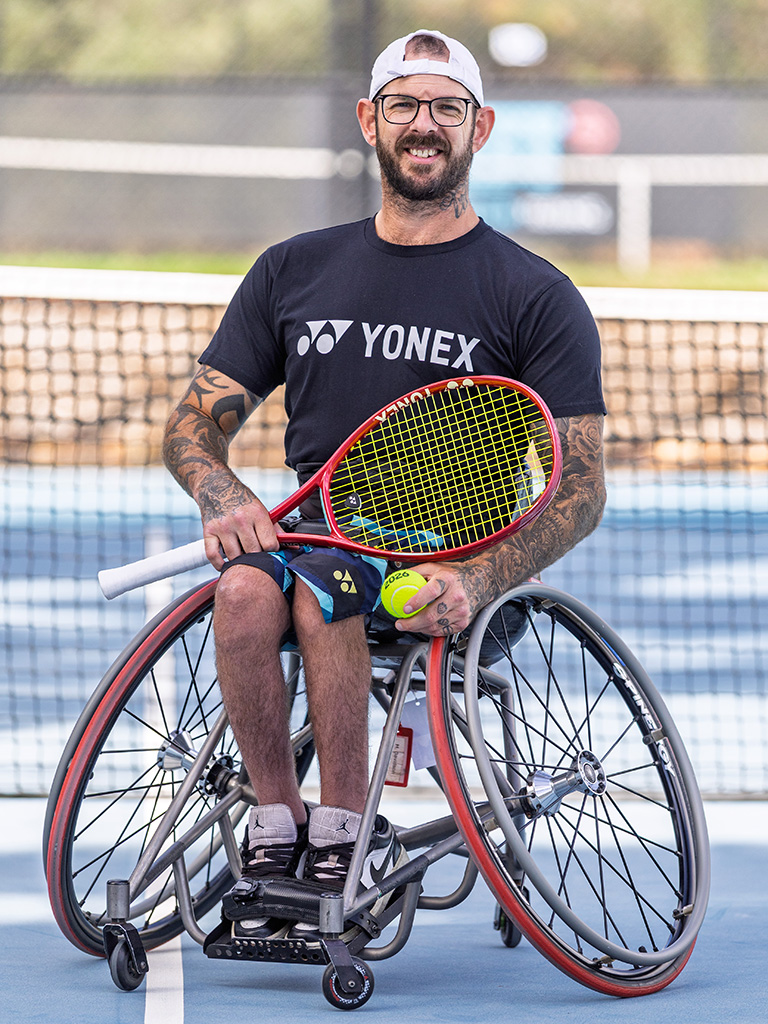
These days, Heath lives in Frankston with his partner, Eden, who works as a physiotherapist, and their groodle, Doug. He trains at Frankston Centenary Tennis Club and travels the world competing. He now plays doubles with British player Andy Lapthorne, after years of facing each other across the net.
“Andy’s been on the other side of the court to me for 11 or 12 years, and we realised we’re both getting old, we’re not as fit as we used to be, and we just want to have fun out there now, and we’re really good mates. So, we thought we’d give it a go.”
The partnership is working. At this year’s Australian Open, they made the final. “We’ve played six tournaments together and made six finals. We’re currently world number two.”
In 2024, Heath was set to compete at the Paris Paralympics but made a difficult decision. “I had to pull out of Paris because my mum went into palliative care the day before I was supposed to leave. She was struggling with lung cancer and dementia, so I made the decision to stay at home and spend whatever time I had left with her, which was the best decision I’ve made.”
While competing at the 2028 Paralympics in Los Angeles is his main personal tennis goal, Heath is also focused on building the sport. As Vice Chair of the Wheelchair Player Council, he is working to increase prize money and improve conditions for players, like teenage Australian wheelchair tennis up-and-comers, 13-year-old Sonny Rennison and 14-year-old Arlo Shawcross.
“It’s such a huge cost at the moment for us to travel full-time. I’m trying to make my sport better than what it was when I first started and give kids like Sonny and Arlo a way that they can do this for a living and make enough money that they can retire when they finish their sporting career and be set up for life,” he says.
“We’re aligning ourselves with the able-bodied tour, and obviously that comes with more recognition, more TV time, and bigger stages. For so long, we’ve wanted the opportunity to showcase what we can do as athletes, and we’re finally starting to get those opportunities.”
IG @heathdavidson13
First published in Peninsula Essence Magazine
