

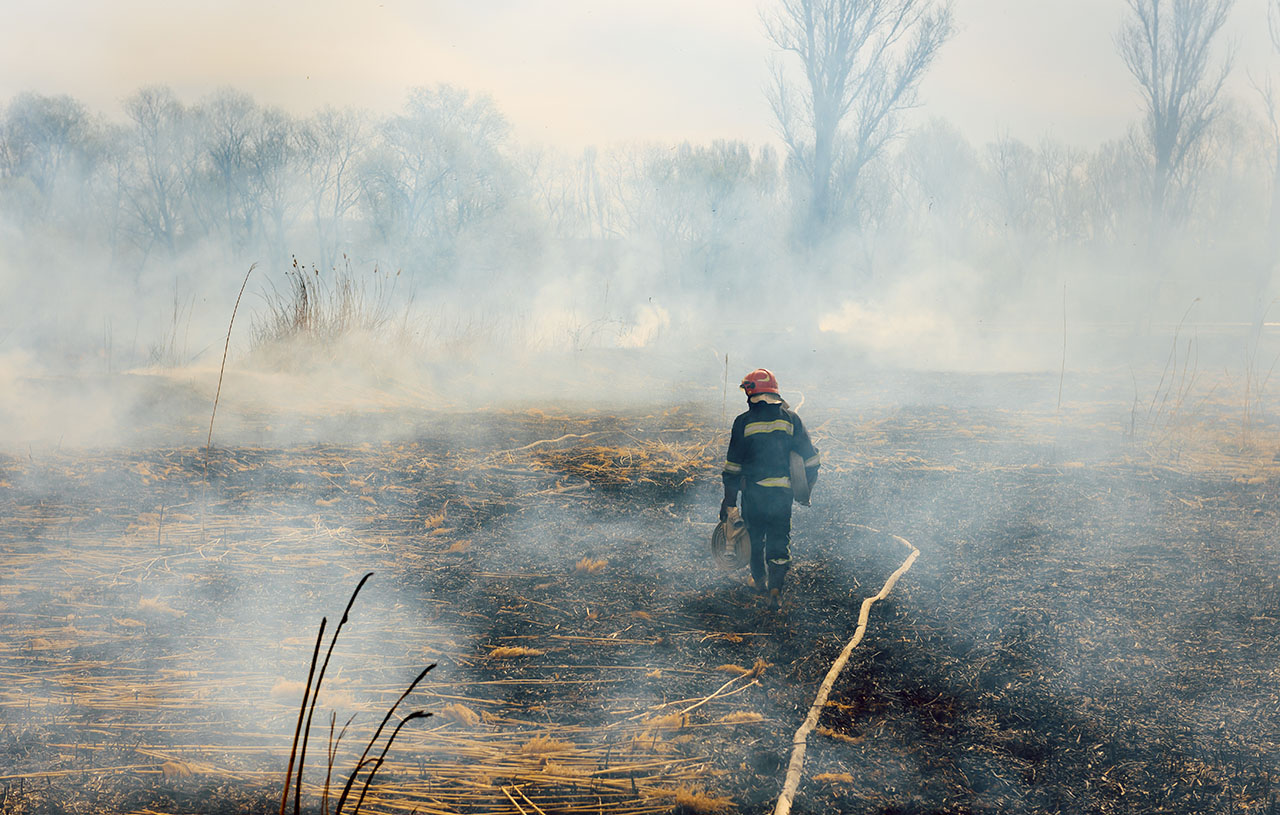
THE CFA is calling on locals to lend a hand as community “citizen scientists” to help monitor grassland dryness – a key indicator of the state’s fire risk.
According to the CFA, as summer approaches, grassland curing, the natural drying of grasses, becomes a major factor in fire behaviour.
Curing figures are fed directly into CFA’s fire danger rating system at this time of year, meaning reliable on-ground observations are vital.
Each week, the CFA blends satellite readings with reports from volunteers to produce maps showing how dry Victoria’s grasslands are.
CFA remote sensing analyst Dr Danielle Wright said more trained observers were needed to bolster coverage in several parts of the state.
“There are still a few areas of the state including the north-east, north-west and south-west parts of the state where we would really benefit from having more volunteers out on the ground,” Danielle said.
In regions without local observers, she explained, “we are solely relying on satellite data.”
She said while satellite modelling was useful, it had limitations.
“The satellite model is extremely useful, but it can’t always pick up every detail. It can overestimate and underestimate curing. Cloud cover can block readings for weeks, grass under trees can be missed entirely and rainfall can impact readings.”
Wright added that satellites often misinterpreted new green shoots after rain.
“After rain new green shoots might appear, but they’re tiny and don’t affect fire behaviour. The satellite sees green and assumes the area is of lower risk.
“Having volunteers makes a huge difference. They’re the ones confirming what is actually happening on the ground and capturing the details the model often misses.”
Long-time volunteer observer John Taubman, who has spent the past nine years as a citizen scientist, said the role offered both community service and personal insight.
“Being a grassland observer really sharpens your awareness of how the environment changes from day to day,” he said.
“You learn to read the landscape, from the wind and temperature to the humidity. You don’t always need instruments to tell it’s a bad fire day.
“The satisfaction comes from knowing we are providing a service to the community. The more data points we have on the map, the more accurate the data is.”
Wright said anyone could take part, not only CFA members.
“Everyone is welcome to participate, not just CFA volunteers. It’s a great way to support CFA without needing to be on the fireground,” she said.
For more details visit www.cfa.vic.gov.au/grass or email grassland@cfa.vic.gov.au
First published in the Mornington News – 2 December 2025