

By Lisa Bayley – Somerville, Tyabb and District Heritage Society
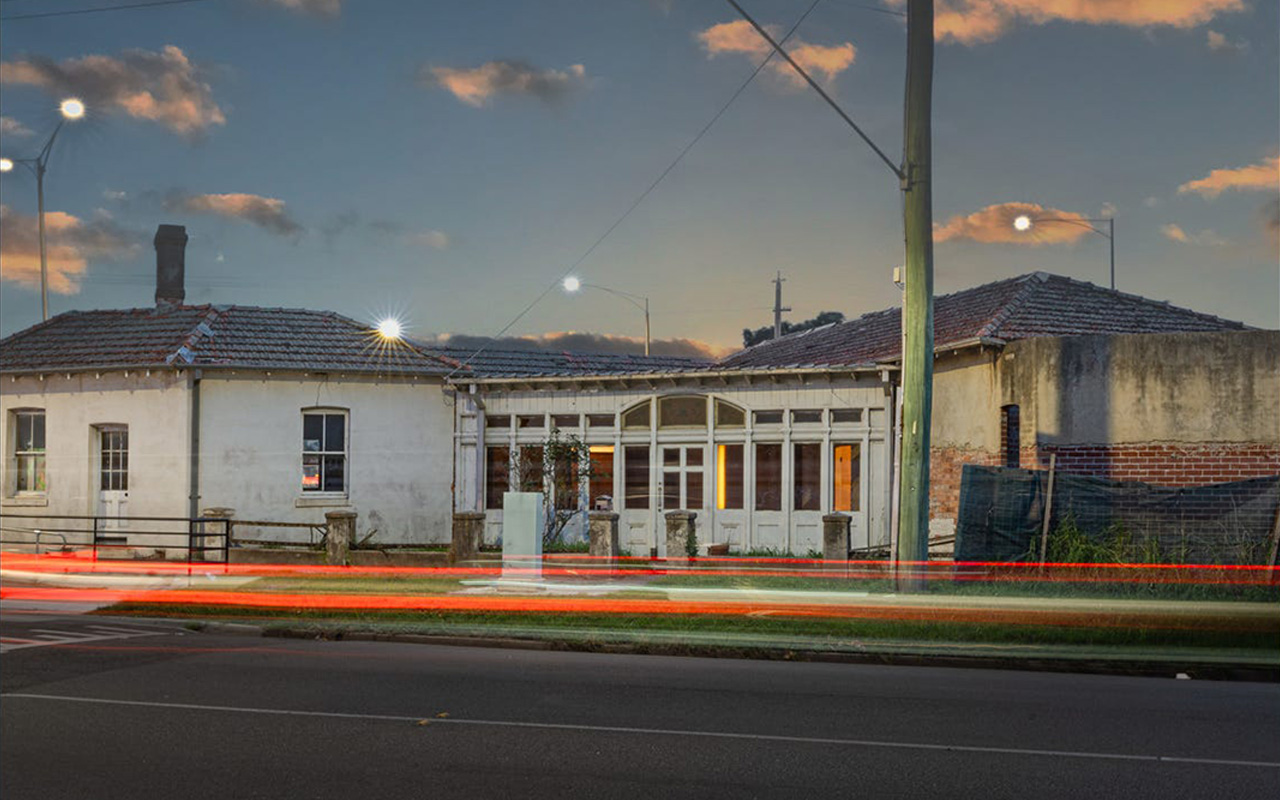
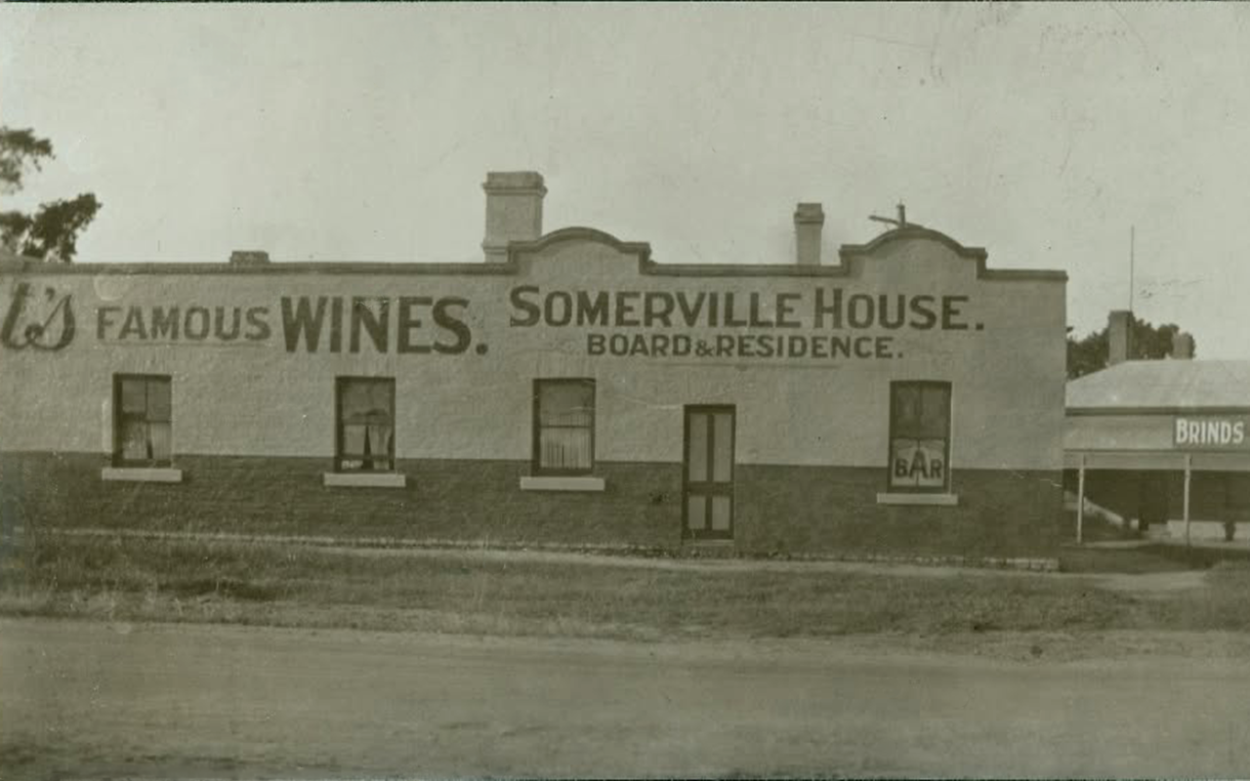
Standing near the roundabout on Frankston-Flinders Road and Eramosa Road is one of Somerville’s most recognisable landmarks – the distinctive pink building that has occupied the site since at least the late 1870s or early 1880s. For much of its early history the premises operated as a Wine Café, a type of small-scale hotel licensed under Victoria’s Colonial Wine Licence system.
The Colonial Wine Licence
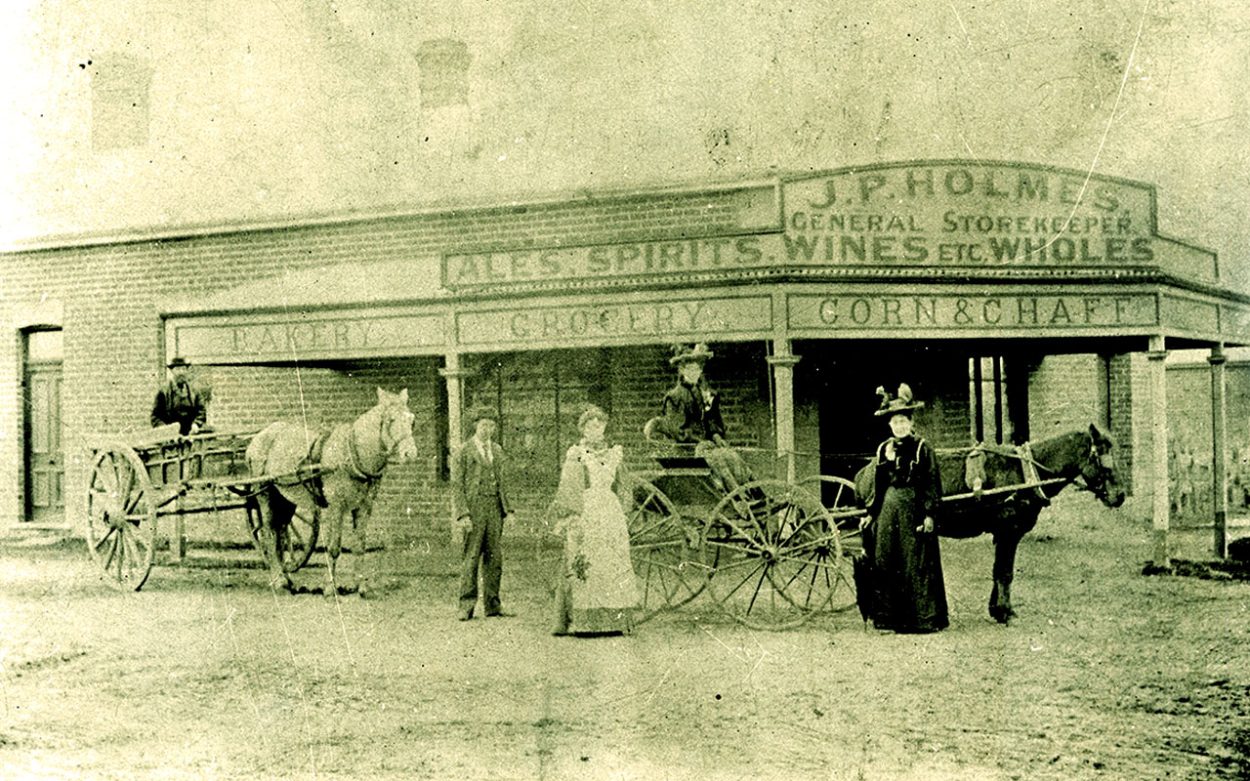
In 1884 Peter Holmes applied for a publican’s licence for his business premises in Somerville. The application was refused because the building did not meet the legal requirements necessary for a full publican’s licence and Holmes was forced to continue operating under a Colonial Wine Licence. But what exactly did this mean?
Liquor licensing has always been a complex area of law, and the Colonial Wine Licence was introduced in 1864 as an attempt to regulate and limit the sale of alcohol. During the late nineteenth century the temperance movement, which promoted moderation or abstinence from alcohol, was particularly strong. Throughout Victoria there was constant political and social tension between supporters of temperance and those connected to the liquor trade.
The Colonial Wine Licence permitted the sale of wine, cider and perry — the pear equivalent of apple cider. The Victorian government believed these drinks caused less drunkenness and were more “civilised” than beer or spirits. The licence system was also designed to encourage locally produced Australian wine, reduce reliance on imported alcohol and provide a more controlled alternative to full hotel or public-house licences.
Why Holmes couldn’t get a hotel licence
One of the principal reasons Peter Holmes was refused a publican’s licence in 1884 was that his premises did not contain the accommodation required under the Licensing Act. In nineteenth-century Victoria, hotels were expected to serve an important public function beyond simply providing alcohol.
Licensed hotels were required to accommodate travellers, particularly in rural districts where roads were rough and journeys between towns could take considerable time. Premises seeking a publican’s licence generally needed guest bedrooms, dining facilities and suitable accommodation for travellers and their horses.
Holmes never succeeded in obtaining a full publican’s licence. In the early twentieth century the Somerville Hotel opened, and Henry Gomm obtained the district’s publican’s licence at a time when only a limited number of licences were available. Holmes did, however, later obtain a grocer’s licence, allowing him to sell sealed alcohol from a separate shop across the road from the Wine Café.
A stop on the coach road
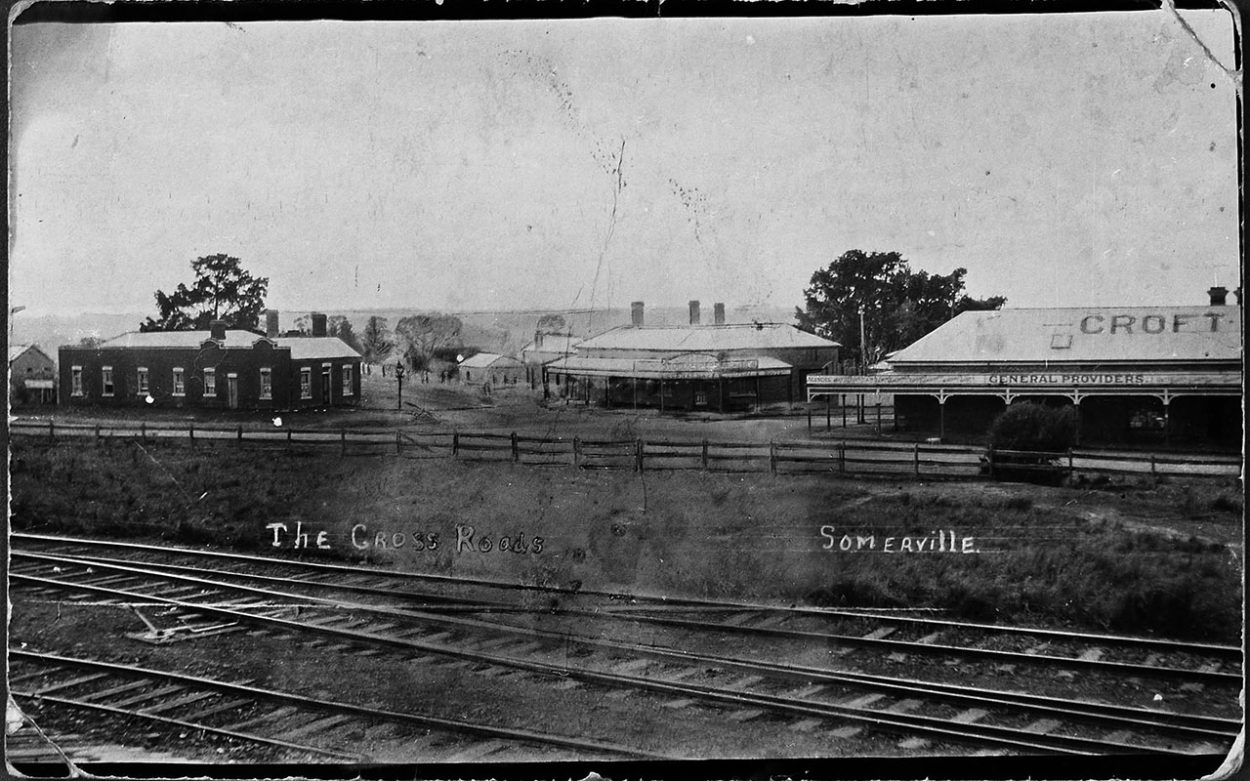
The Wine Café was far more than simply a place to purchase alcohol. During the coaching era it operated as an important stopping place for mail coaches travelling between Melbourne and Hastings and was closely associated with Cobb & Co. drivers and passengers.
Before railways and motor vehicles transformed transport, establishments such as Holmes’ Wine Café formed an essential part of Victoria’s communication network. Travellers could rest, exchange news and continue their journey, while mail coaches connected Melbourne with the growing settlements of the Mornington Peninsula.
Historical accounts describe the premises as a regular stopping place on the route between Melbourne and Hastings, where travellers could connect with coastal transport services and continue on to destinations such as Phillip Island.
More than a place to drink
The Wine Café also served a broader civic purpose, particularly before the construction of the Somerville Mechanics’ Hall and other public buildings.
Under colonial licensing laws, licensed premises could be required to make rooms available for official proceedings, and it is documented that magisterial inquiries were held at the Wine Café. In small rural townships, hotels and wine cafés often functioned as informal courthouses, meeting halls and centres of local administration because few dedicated civic buildings yet existed.
As a result, the building occupied an important place within early Somerville society. It was not merely somewhere to purchase alcohol, but also a transport stop, accommodation house, meeting place and civic centre during a formative period in the township’s history.
Changing hands, changing times
Peter Holmes passed away in 1916, and it appears that around this time Robert Wadsworth took over the Colonial Wine Licence. The premises remained associated with the Holmes family until 1924, when it was sold to the Sheffield family.
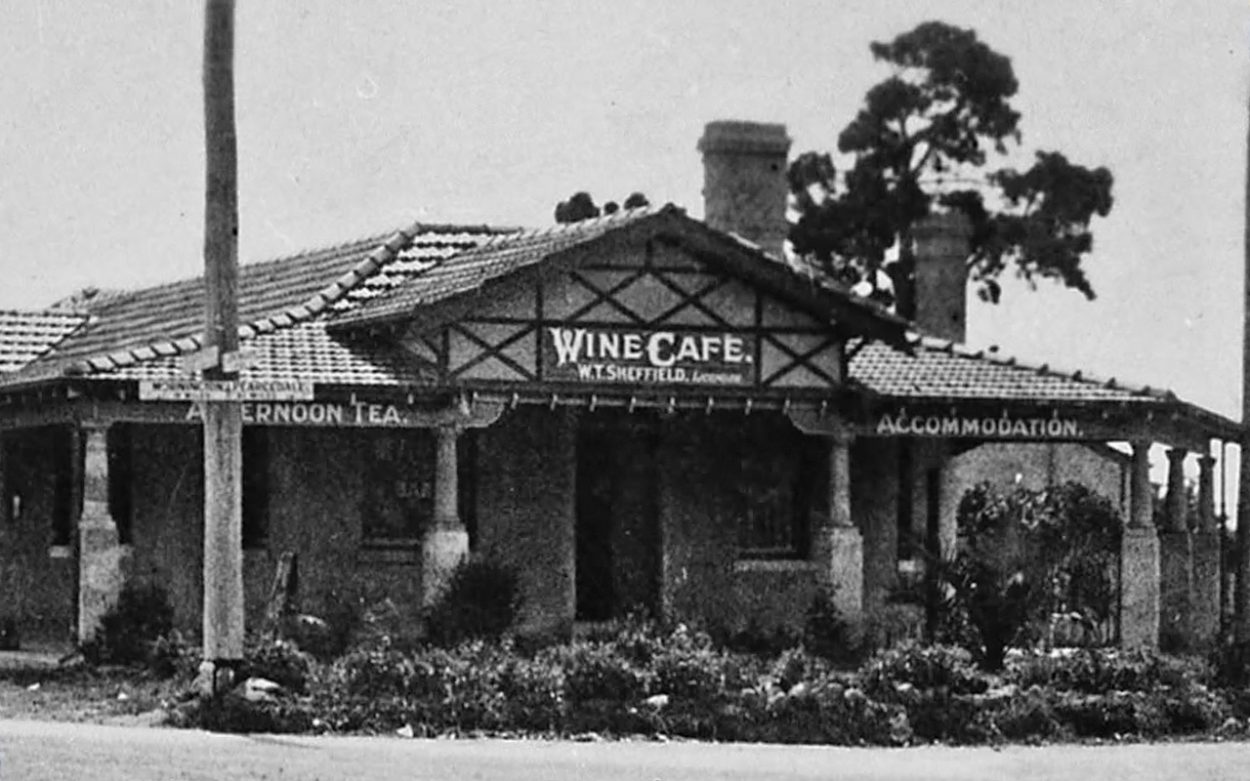
The Sheffield family made a number of visible changes to the property. Verandas were added, the roofline was altered to a pitched roof, and palm trees were planted at the front of the building.
The Sheffield family continued to operate the Wine Café until December 1945, when the licence was transferred to Jean Simms. A little over a year later, in February 1947, the licence passed to Ruby Ann Warne who continued operating the premises until it was purchased by Len and Lubov Sterling during the mid-1950s.
It was around this period the Wine Café ceased operating as a licensed premises and became a private residence, although the exact date the Colonial Wine Licence ended is not known. The Colonial Wine Licence system itself was gradually phased out across Victoria during the 1950s and 1960s and no longer exists today.
By the late 1960s the building was undergoing further change. The surrounding verandas were deemed unsafe by the Council and removed, together with the palm trees which had become one of the property’s most distinctive features.
The surrounding streetscape also changed. The Somerville Soldiers’ Memorial, visible in earlier photographs near the roundabout, was relocated in 1966. It was first moved to the entrance of Clarinda Street before eventually finding its present home at Fruit Growers Reserve on Jones Road, Somerville.
The building today
Today, the property is entering a new chapter in its long history. Following the death of its owner, the son of Len and Lubov Sterling, in July 2025, the site is being administered by State Trustees as part of a deceased estate and is currently undergoing clean-up and maintenance works in preparation for a future sale.
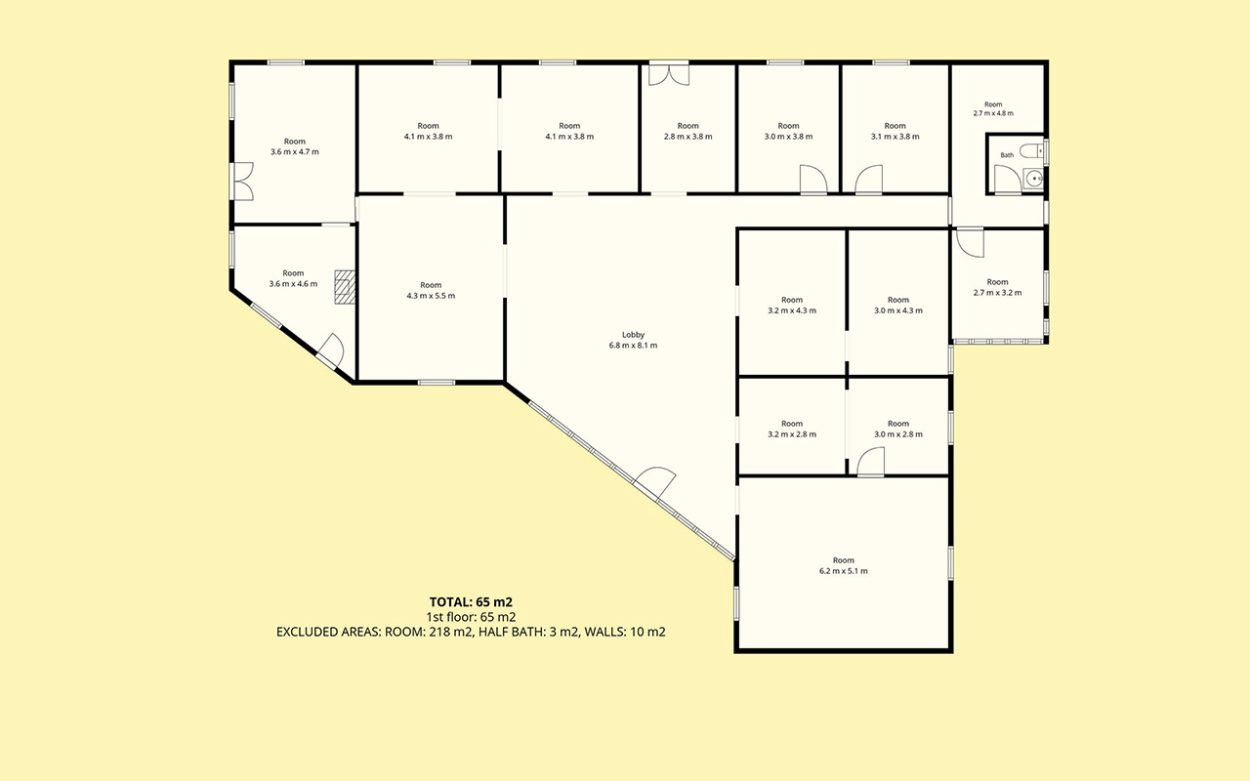
For well over a century the site, which has 15 rooms and a lobby, has been connected to community life in many different ways – as a Wine Café, coaching stop, accommodation house, business premises and local landmark. As the property prepares to pass to a new custodian, its story serves as a reminder of the many layers of history that remain embedded within Somerville’s built heritage and of the important role the site has played in the development of the township.
First published in Peninsula Essence Magazine
