

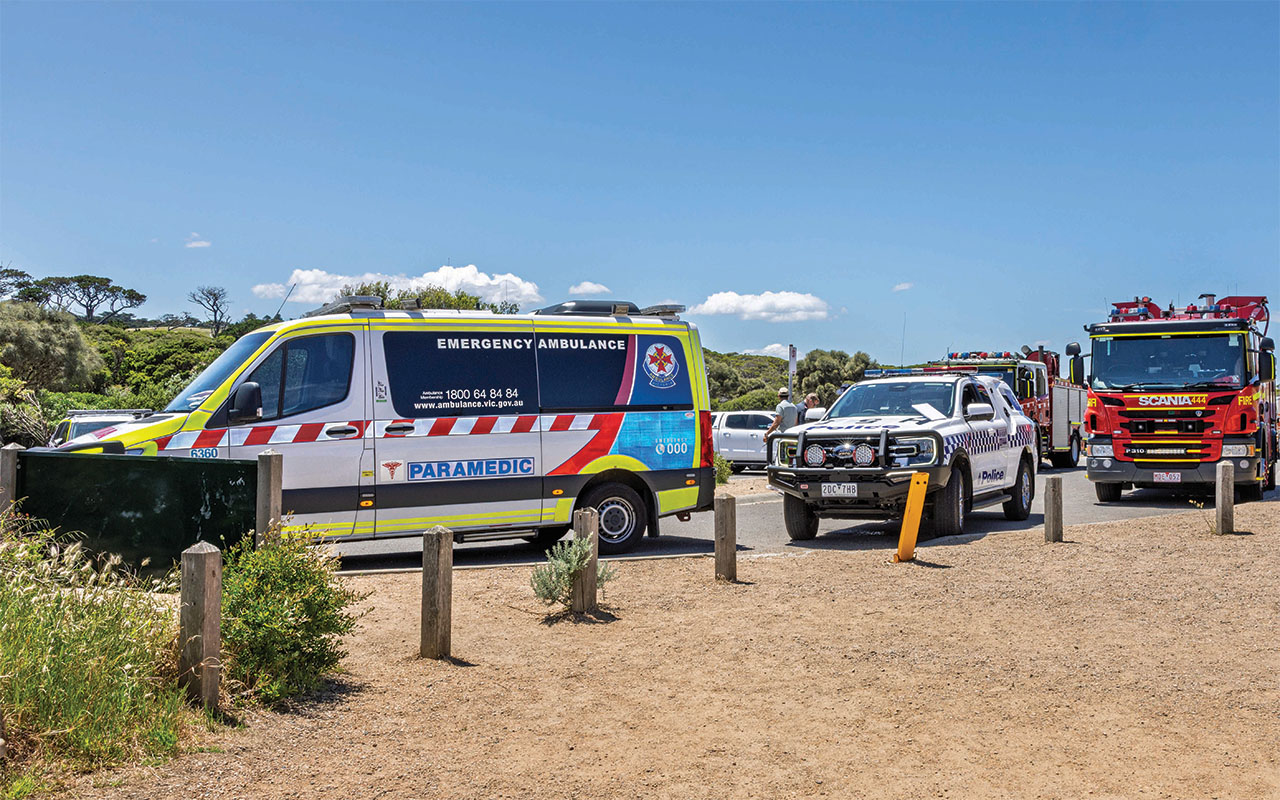
NEW figures show ambulance response times on the Mornington Peninsula have increased by an average of more than 35 seconds over the last quarter. Frankston’s local government area also recorded slightly slower response times after new data was released by Ambulance Victoria last week for the July to September quarter.
Code one “lights and sirens” emergencies are measured from the time of a triple-0 call being answered to the first ambulance arriving at the incident scene – with a statewide response time target being 15 minutes. On the Mornington Peninsula, 62 per cent of ambulances callouts took less than 15 minutes to get to patients. The average response time for paramedics was 15 minutes and 40 seconds – up 36 seconds compared to last quarter, which was 15 minutes and four seconds.
There were 2865 emergencies on the peninsula over the three months of the quarter. Compared to the previous quarter, when paramedics responded to 64.1 per cent of emergencies within 15 minutes or less on the peninsula with a total of 2818 cases.
In neighbouring Frankston, ambulances took an average of 12 seconds longer to get to an emergency compared to the last quarter, with an average response time of 14 minutes and ten seconds.
A total average of 72.1 per cent of ambulance callouts got to a patient in less than 15 minutes within the Frankston city, up from 71.8 per cent the previous quarter.
Ambulance Victoria’s regional operations executive director Michael Georgiou said the demand for “lights and sirens” ambulances across Victoria increased by 2.8 per cent compared to the previous quarter.
“Winter consistently brings the highest emergency call volumes, and this year was no exception,” Georgiou said. “This was our busiest first quarter on record with 101,632 Code one emergencies in just three months, and overall, it was our second busiest quarter ever. Despite this record demand, we continue to lead the way in pre-hospital patient care, including the best cardiac arrest survival rates in Australia and third best anywhere in the world.”
Ambulance Victoria’s metropolitan regional director Vanessa Gorman said their secondary triage team of nurses and paramedics had connected 49,353 patients with the care they needed, helping free up crews for patients in emergencies.
Metropolitan regional director Jessica McGowan said community awareness plays a key role in ensuring paramedics can reach the most critical patients as quickly as possible.
“Our paramedics are focused on reaching the sickest patients first — but every day, about one in five calls to Triple Zero (000) do not need an emergency ambulance response,” McGowan said. “There are many options people can access when they need timely medical care and health advice, at any time of the night or day – but not an emergency ambulance or calling Triple Zero (000), including the Victorian Virtual Emergency Department (VVED), Urgent Care Clinics, Nurse-on-Call, GPs and pharmacists.”
First published in the Mornington News – 2 December 2025
