

A PENINSULA wildlife advocate has resigned from the Arthurs Seat Eagle Local Community Reference Group (LCRG), saying he could not be part of a process that pressured him to frame wildlife displacement as a positive outcome.
Craig Thomson, president of Save Kangaroos on Mornington Peninsula (SKOMP) and a wildlife rescuer with more than 25 years’ experience, withdrew from the group following the March meeting, citing disrespect toward him and what he describes as the dismissal of wildlife welfare concerns.
“Clearing vegetation in a state park kills wildlife. It displaces wildlife. It fragments habitat. It destroys kangaroo songlines. And no amount of corporate PR can change that,” Thomson said in a statement released on 13 May.
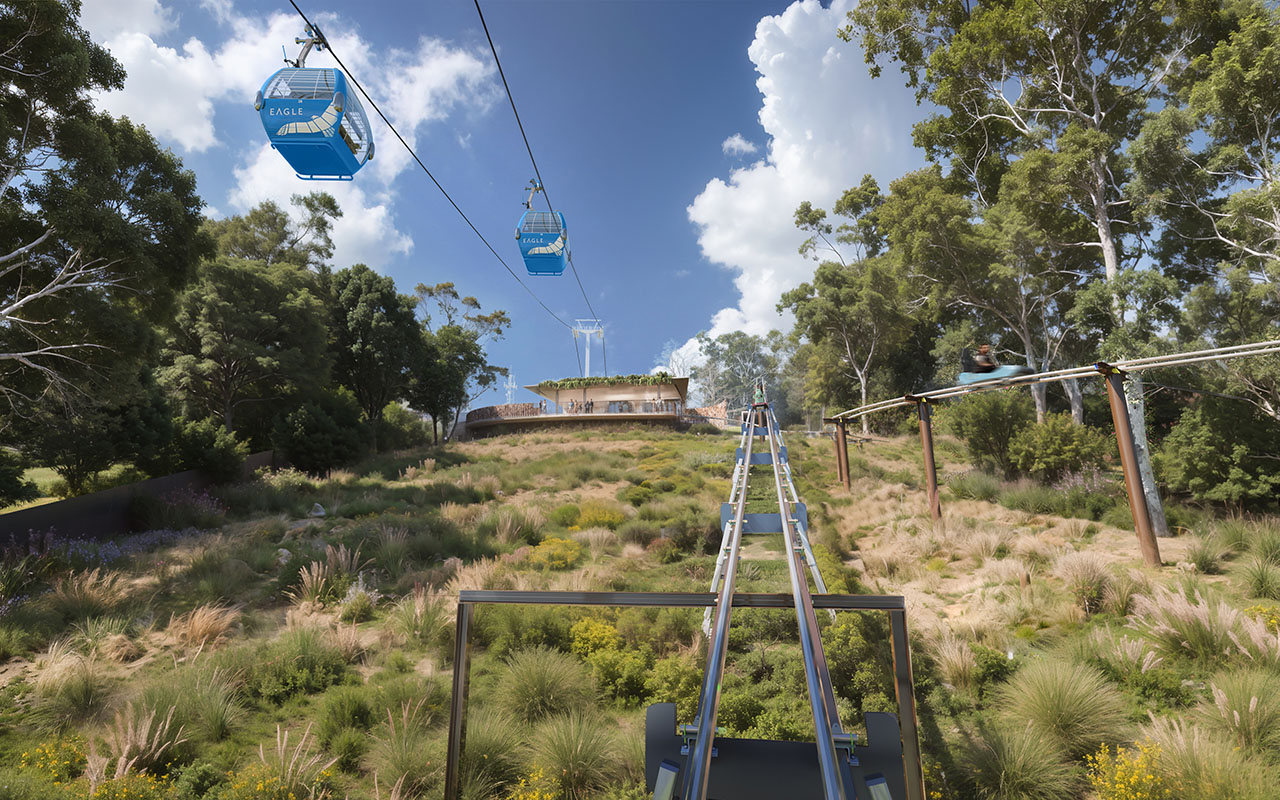
The LCRG was established by Arthurs Seat Eagle to facilitate community involvement in its planned upgrade of the Arthurs Seat State Park site, which includes a proposed luge ride. Thomson joined the group to advocate for wildlife.
“I joined to get a better understanding of the project and to advocate about the pressures wildlife face in the immediate area,” said Thomson.
He said the March meeting was a turning point, describing a failure by the group to engage seriously with his evidence about wildlife impacts, including the risks of translocation and the threat of increased vehicle collisions along wildlife corridors.
“No matter how many times they asked for a positive outcome, my answer would not change unless they expected me to change my values.
“I actually asked the group what they think happens to wildlife when removed from their home. Only to be looked at like I was speaking a different language by the vast majority,” Thomson told The News.
Thomson said his wildlife welfare concerns were also absent from the published meeting notes. He said the notes instead included a comment that community members do not understand planning decisions.
“The minutes or meeting notes for March failing to address this discussion about wildlife welfare is a reflection of this,” he said.
Fellow LCRG member, Lysette Ashford, who is also a representative of community group Save Our Seat, said she witnessed the March meeting and backed Thomson’s account of what occurred.
“He was explaining the very unpalatable and unattractive reality of how this works… how it sounds nice on paper, it doesn’t work that way… and everyone present, except for me, just didn’t want to hear what he was saying,” said Ashford.
Ashford said the chair of the meeting failed to intervene when Thomson was being spoken over.
“There can be all sorts of robust discussion around the table, but when a clear line in the terms of reference is bringing community concerns, and the community concerns we bring in are not only sidelined or not answered but shut down, that’s not okay,” said Ashford.
Ashford confirmed that both Thomson and herself were selected for the group by Arthurs Seat Eagle from a field of expressions of interest, with their community affiliations and backgrounds known to the company at the time.
“They chose us to be on that group. We didn’t insist. We were chosen amongst, I think, a few dozen applications,” she said.
In his statement, Thomson raised concerns about the broader environmental impact of the proposed luge, including habitat fragmentation, increased road risk for kangaroos and the fate of species such as the Southern Toadlet, which at just 5cm in size is unlikely to be detected by wildlife salvage crews during vegetation clearing.
He also pointed to the Department of Energy, Environment and Climate Action’s own warnings that wildlife translocation programs have a high failure rate and that even non-threatened species should not be moved, with the risks often not outweighing the benefits.
“The only positive outcome for wildlife is not to build the luge,” Thomson said.
Thomson described the proposal as the second time Arthurs Seat Eagle has sought to remove native vegetation in the state park, saying the first was the construction of the base and summit gondola stations. He said the company’s long lease and what he described as an open-ended interpretation of the National Parks Act raised concerns about the scope of future development.
Arthurs Seat Eagle CEO, Matthew Mulkearns, rejected Thomson’s characterisation of the March meeting and its notes.
“Craig has never spoken of feeling pressured to adopt any view other than his own and our meeting recordings/minutes are evidence of this,” Mulkearns said.
Mulkearns said meeting notes were distributed to all members after each session for amendments or additions, and that Thomson had never suggested his comments were misrepresented.
On the wildlife question, Mulkearns said the company shared concerns about local ecology and had made deliberate design decisions to protect and restore wildlife habitats and maintain animal movement corridors, with luge placement strategically considered for this outcome.
He said the landscaping strategy would introduce thousands of indigenous seedlings and plantings and restore vegetation lost on the escarpment, with a fellow LCRG member – described as having expertise in indigenous horticulture – set to help lead that work.
On the approvals process, Mulkearns said the project had undergone a two-year process involving multiple independent expert reports covering areas including ecology, cultural heritage, bushfire, acoustics, traffic, arboristry and environmental sustainability.
“The Arthurs Seat Eagle claims it has ‘listened’ by shortening the luge and reducing vegetation removal. That is not environmental stewardship. It is evidence that our environmental laws are failing. Laws that should protect parks, not enable their commercial exploitation,” said Thomson.
Thomson said SKOMP would continue to oppose the project and support Save Our Seat’s campaign to have it stopped.
“SKOMP will continue to speak out about this poor decision every opportunity we get,” he said.
The group also runs weekly Sunset with the Kangaroos walks and talks at Seawinds Gardens on Saturday evenings, a wildlife ecotourism initiative Thomson said demonstrated an alternative economic model for the park that did not require habitat destruction.
Arthurs Seat State Park is listed as an IUCN Category III protected area, designating it as a site focused on prominent natural features and associated ecology. Thomson cited this classification in questioning whether the approvals process gave sufficient weight to conservation values over economic considerations.
“This luge proposal is not progress. It is not tourism. It is not community benefit. It is habitat destruction inside a state park – and it must be stopped,” Thomson said in his 13 May statement.
In a separate letter to Planning Minister Sonya Kilkenny, Thomson called on the government to explain how the luge permit was consistent with the park’s international conservation listing, noting that the premier’s announcement of the project emphasised economic and job creation benefits.
“The focus of state and national parks are the protection of flora and fauna, not economics and jobs,” Thomson wrote.
At the time of publication, Thomson had not received a response from the minister.
First published in the Mornington News – 26 May 2026
