

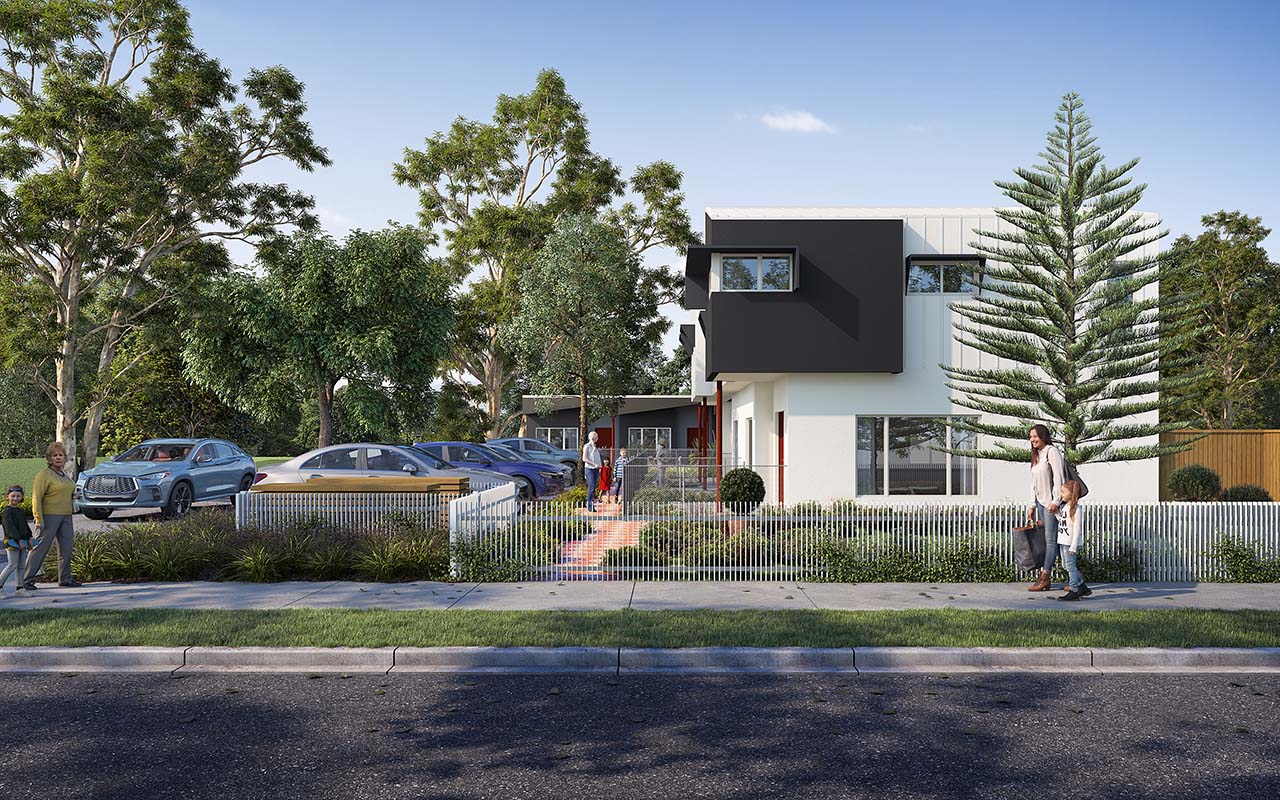
SEVEN new homes in Hastings will soon offer safe, affordable housing for women and children experiencing housing insecurity, delivering long-term stability for some of the peninsula’s most vulnerable residents.
Women’s Property Initiatives (WPI), a community housing provider with 28 years experience working with women and women-led families, is developing the $4.5m modular development in partnership with Mornington Peninsula Shire.
The shire provided the land on a long-term peppercorn lease – a nominal arrangement in which land is leased for a token amount rather than market rate – with funding coming from Homes Victoria through the state government’s Big Housing Build, and contributions from philanthropic partners including the Jack and Ethel Goldin Foundation, TEN Women and Homes for Homes.
The development will include four two-bedroom homes and three one-bedroom homes. WPI Communications Manager, Sally Martin, said the one-bedroom homes would most likely be allocated to older women, while the two-bedroom homes would accommodate women with children.
“These are people on low incomes who just can’t make ends meet and can’t afford private rents,” said Martin.
“Many of our renters work, and many older women have raised families and worked all their lives and, through circumstance, find themselves with very little savings in their retirement.”
Constructed off-site using modular methods, the homes are scheduled for completion by the end of 2026, with a site gathering planned in coming weeks bringing together representatives from Homes Victoria and the council.
Tenants will be drawn from the priority category of the Victorian Housing Register, with WPI working with local support agencies to identify women from the area.
“We look for things like ties to the community and making sure people have access to the services they need – if they have children, whether schools are available – to make sure the tenancy is successful,” said Martin.
WPI currently owns 140 homes and manages a further 160 across Victoria, housing more than 500 people. Renters pay no more than 30% of their income in rent.
Martin said Hastings was identified as an area of particular need, pointing to council data showing more than 2,500 people on the waiting list for social housing in the catchment, with only around 1,300 social housing dwellings currently available.
“Sleeping rough has been identified as a pretty significant issue in the area, and with housing affordability declining, the Mornington Peninsula is definitely an area where homelessness is a very significant issue,” said Martin.
As of May 2026, there were 168 people listed as actively homeless on the peninsula with 132 listed as “sleeping rough”.
This is the highest figure recorded by any Victorian local government area collecting this data, including Melbourne’s CBD.
The peninsula also has the highest number of women and people over 55 sleeping in tents and cars anywhere in the state.
In 2025, nearly 1000 people sought assistance for homelessness on the peninsula, with demand for crisis assistance rising 33% in the past year.
Women aged 30–39 face the highest rates of family violence, many with children in their care, while women over 50 are the fastest-growing group needing housing support.
Acting mayor Cr Paul Pingiaro said the development was an important step, but acknowledged more was needed.
“These seven homes will make a real difference for women in Hastings, providing safety, stability and a place to call home. But we know there is much more to do,” he said.
“We’re committed to working with partners to deliver more housing across the peninsula. We are actively identifying suitable council-owned land and pursuing opportunities with organisations like Women’s Property Initiatives and YWCA to help address the growing housing crisis locally,” said Pingiaro.
Martin said the solution ultimately came down to funding.
“It’s always about more funding. We just need to increase the supply of housing. More and more people are needing it.”
First published in the Mornington News – 16 June 2026
