

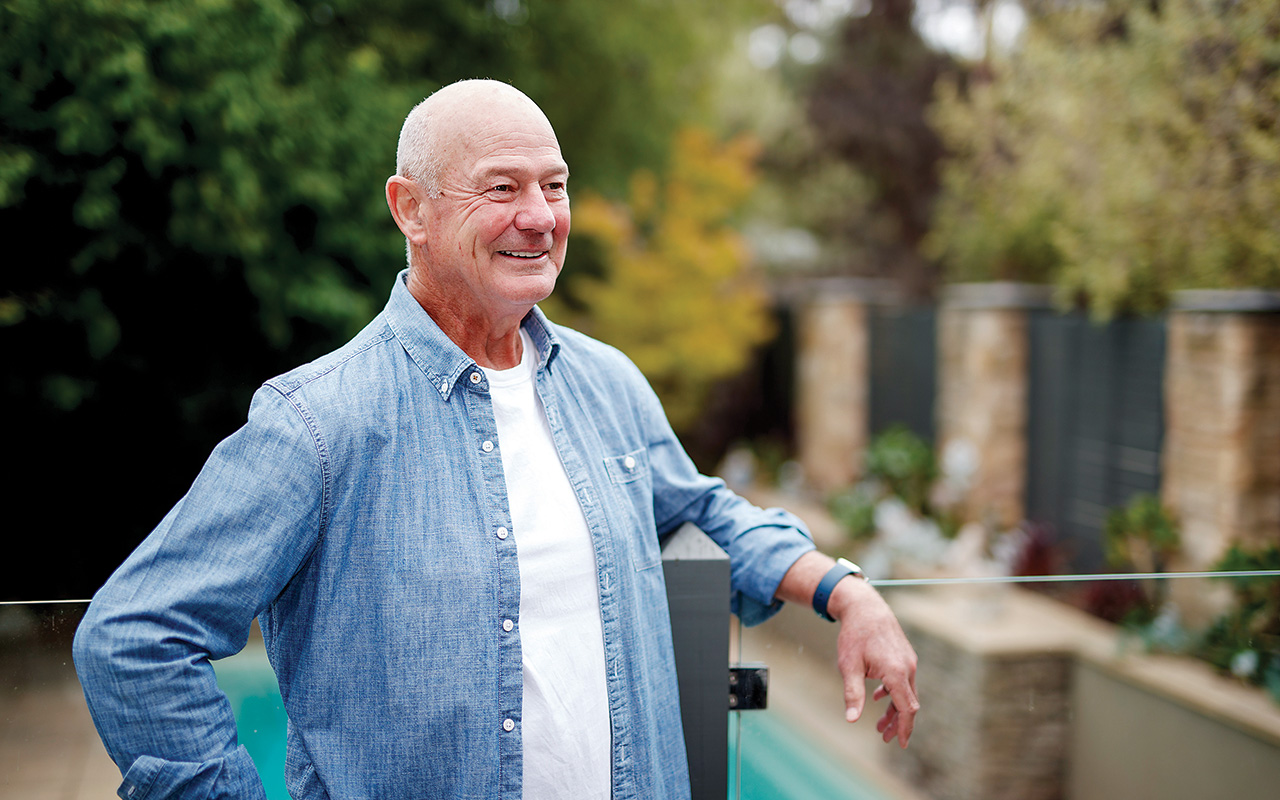
MOUNT Martha resident Peter Scott has always kept himself in reasonably good shape with regular physical exertion, so when he suffered a stroke at 62 it forced him to reevaluate what “healthy’ really is.
“I was in a pretty high pressure corporate job and led a busy life, but I was a good weight and was fit. In fact, I had just a week or so earlier completed a half marathon, but that’s what tricked me,” he said. What Scott didn’t know was that he had high blood pressure, which is one of the risk factors of stroke regardless of how fit and otherwise healthy a person may be. “Stroke just wasn’t on my radar, it’s not something I ever thought would affect me,” he said.
“That was 10 years ago and I have made it my purpose to now spread the message that everyone should be aware of their blood pressure, and understand the importance of monitoring it and reducing the risks,” he said. “I had underestimated the risks of stress and high blood pressure and I was just incredibly lucky that when I had my stroke I was around people who knew what was happening.”
Scott was in fact having what is colloquially called a slow bleed or hemorrhagic stroke, which is literally too much blood in the brain that results in a rupture. Patients may appear to have slowed down, their eyelids droop, they can become confused and irritable and experience difficulty speaking, muscle weakness and altered consciousness.
As he was with a medical professional taking him for a work-related physical test, Scott’s stroke was detected early, and he was able to quickly get medical attention. That’s most likely what saved his life and protected him from permanent impairment.
“New data tells us that less than 50 per cent of people are aware of the signs of stroke, and that’s something I would like to change. It’s become a bit of a mission.” From the stroke site – at the top of the Rialto tower in Melbourne – Scott was rushed to a GP and then sent to hospital for two days followed by months of rehabilitation. Because he was able to get medical help quickly, the now 72-year-old has recovered completely and has no ongoing effects.
Prevention is his new key word, and he says data shows that strokes cost the Australian community $20 billion a year.
“And the sad thing is 80 per cent of stokes are avoidable. Even if we could reduce the rate by 10 per cent that’s going to make a huge impact,” he said. Despite suffering more tragedy in his life, losing his wife not long after the stroke and being diagnosed and beating cancer himself, his new-found focus on good mental and physical health has allowed him to stay strong and navigate the heartbreak and health issues.
Scott says spreading the message about knowing your blood pressure, understanding the risks, and warning signs of stroke has given him a new focus. “If I can tell everyone to monitor their blood pressure regularly – because it can fluctuate – and save anyone from this heartache, I am happy.”
First published in the Mornington News – 2nd April 2024
