


Tackling the cause of rubbish on our beaches
There are various ways rubbish ends up on our treasured peninsula beaches. One of the most consequential – and fixable – is the contribution by individuals and groups who carelessly choose to leave their waste items behind after enjoying the natural coastal serenity.
When it came to which method the shire should select for beach cleaning (mechanical raking versus by hand), they seem to have overlooked also tackling the causes.
Council can’t control what washes up on our beaches that originates elsewhere in the bay and beyond. But they can implement the laws to prevent and punish the litterbugs locally.
In over four decades on the peninsula, I’ve never seen nor heard of anyone being issued with a fine for beach littering. Do enforcement staff even exist? I swim at the beach almost daily year-round and I’ve never witnessed these mythical creatures.
Their lack of physical presence is a wasted opportunity to stop rubbish at its source. Fines and consequences for sullying our sand are deterrents missing in action.
Hot chip tip: Patrol the Mt Martha beach boxes commandeered each day and evening by visitors to consume their takeaway meals, drinks, smokes etc and who simply walk away leaving everything behind. The regular issuing of fines in this strip alone would surely pay the wages of enforcement officers across the entire peninsula. Set the fines high enough to act as a meaningful deterrent. And ensure penance includes joining the hand cleaners on a shift as the community service component.
A win for the council, the environment, other beach users and the ratepayers.
Ann Scally, Mt Martha
The pits
I was observing a contractor repairing a neglected filtration pit that should have prevented pollutants from entering our bay. This pit was featured in an article in The News (Rye pit hazard raises questions over shire response, The News 30/9/25) and an initial risk of drowning in the pit was reported to the shire on 10 September 2024.
I asked the contractor a very simple question, “When do you think this pit was last serviced?” The contractor’s answer was, “probably never”.
He went on to say the pit was full of sludge and made other comments.
The reply from the shire to my request for information on the maintenance of the pit, after I quoted the manufacturers and EPA guidelines that the appropriate frequency would be four times per year, was a confirmation that this regime was being followed by the shire.
This reply indicates several possibilities and includes the following.
The shire officer has been misled by the prime contractor, Fulton Hogan, or Fulton Hogan has been misled by their contractor, amongst other possible possibilities, including outright cover-up.
I would be very interested to see the invoicing for this maintenance, and, from the invoicing and payment details, which service claim has been made.
As it is obvious, the Shire’s reply does not align with the facts; answers need to be provided.
This is starting to look like lies to cover up failure to maintain the pits or a criminal offence of fraud if payment has been made for a service not supplied.
At this stage I have had no reply from the mayor or an acknowledgement of his receipt of my response to the shire’s claim of appropriate service taking place every three months.
As a ratepayer, am I entitled to know if there needs to be more scrutiny of the preferred contractor system?
Eric Dettman, Rye
Frankston developments
It is good news that the City of Frankston is now getting its act together to get permits through to get new buildings built to increase the Frankston population around the Frankston Station.
Other councils such as the Greater Dandenong Council have had plenty of cranes in the skyline for months.
The council has to give confidence to developers because of their past reputation of not giving planning permits to high-rise developments.
The City of Frankston claims in a full window advertisement that there are 1.2 million visitors to Frankston every year and this is why they got the police to remove the homeless near the Frankston station to hide them. On what legal bases is a mystery, as the vagrancy laws were removed under John Cain’s premiership.
Russell Morse, Karingal
Grassfire risks
We rely so much on technology these days and I was surprised to learn that satellites used to monitor grassland dryness can be hampered by cloud cover and rainfall (CFA seeks volunteers to help grassland fire risk, The News 2/12/25).
As I understand it, about 70 percent of the peninsula is designated as Green Wedge and a significant proportion is grassland — mostly introduced pasture but also remnant native areas in reserves.
As summer approaches, and with the Bureau warning of warmer-than-average days and nights, the risk of grassfire must be increasing.
Volunteering as a citizen scientist with the CFA to help monitor grassland dryness would have to be an important and timely task that could deliver real community protections and help improve the satellite monitoring.
I note that more than 100,000 Australians are contributing as citizen scientists, and about half the records in Australia’s biodiversity database, the Atlas of Living Australia, now come from them.
Who knows — a volunteer might even rediscover one of the peninsula’s ten endangered or vulnerable plant species listed in the shire’s State of Biodiversity Report.
One, the Fringed Spider-orchid, is believed extinct. What a find that would be.
Sue Rechter, Talbot
Housing crisis mistruths
I have to correct a few of the mistruths and dodgy assertions from your correspondent last week (Housing crisis, Letters 2/12/25).
Marg D’Arcy claims Zoe McKenzie only just realised there is a homeless crisis on the peninsula. Given housing, especially low cost and social housing are primarily the responsibility of the state government, it is not a topic where federal MP’s who currently are not in government have great sway.
As a regular reader of the Letters in our local newspaper I can’t recall seeing D’arcy hammering away at the Victorian Labor government over the many years they have been in power in this state, and during which time they have underfunded housing so they can build tunnels and the SRL for which no business case has yet been released – if such even exists.
As for the fact that Zoe votes with the Coalition, well she is a member of the Coalition. Would your correspondent want a Labor MP to cross the floor? Oh that’s right, they are not allowed to. Such hypocrisy!
And then we come to the Housing Australia Future Fund which according to the correspondent’s letter “is now providing thousands of social and affordable houses across Australia”. Fact is they produced about 370 houses as at 30 June this year, and none of those was a new build. They are acquiring existing houses, and renovating them in competition with struggling first home buyers. As for the promised 40,000 homes by 30 June 2029, to use a well-known quote “Tell ‘em they’re dreamin!”.
Jack Wheeler, Mornington
Net Zero
So, where do you stand, Zoe? What did you say in that meeting? Will you represent the views of your now marginal electorate, or will you toe the party line as you always do?
I have it on pretty reliable authority that Zoe was actually arguing against the grain and advocating for net zero. However, being a member of “The Triopoly” she, without recompense, must tow the party line or resign from the front bench to speak her mind and then be crucified for speaking for herself.
This neutering of free speech and public opinion is not limited to the COALition, it is a problem on both sides of the aisle.
We do not have a duopoly, we have a “triopoly” where we can try to choose from the best of the worst. If we had an Independent representing us we would know exactly where they stand on the issue. They would actually be representing our position, not the illiberal populist policies of the Triopoly. And with enough independents to balance the power plenum, we could see some meaningful change.
Keep in mind, you are not voting for the individual and their beliefs, you are voting for the party and their neoliberalism populist policies, except when you vote Independent..
Joe Lenzo, Safety Beach
Call out affiliations
I noted you recently did some background research on one of your letter writers, indicating an apparent letter writing campaign in favour of the Arthurs Seat Eagle upgrade by one commercial construction company (The Eagle Upgrade, Letters 18/11/25).
It is about time you did the same with those pushing professional political positions in this letters page.
You regularly publish letters from the senior ranks of the Climate 200 teal movement without any attribution. Over many months you have been publishing letters from the Climate 200 candidate’s family and campaign leaders without any designation.
Most recently you also published one by the former Labor Party’s campaign director regarding homelessness and our Federal MP’s work with the government’s Special Envoy for Housing, to address concerning levels of rough sleeping on the peninsula.
Again, the professional political affiliation is no where mentioned, giving people a false indication of motive and engagement.
Oddly, such characters have been completely silent when Zoe McKenzie MP for Flinders has taken up the issue of housing and homelessness over many years with the Labor state government – whose job it has historically been to build public housing – have failed to invest in the peninsula’s existing public housing stock.
When there is an industrial partisan relationship – particularly when you have been made aware of it, perhaps the decent thing to do, is to let people know. After all, these political groups are always first to cry “transparency”.
Marg Hawker, Mount Martha
Editor’s note: Marg Hawker is the past Chair of Liberal Women’s Council which is described on the Liberal Party’s website as the “peak body of women in the Victorian Liberal Party”. This information was initially not disclosed by Hawker, but once brought to her attention, she agreed for it to be included at the end of her letter in line with her wishes for transparency when it comes to political affiliations.
Perspective on locality
Regarding the letters about only printing letters from locals (No outsiders, Letters 2/12/25).
I live in Melbourne, but I spend a great deal of time at my extended families’ place on the peninsula and am an active member of a local conservation group.
I care deeply about many issues affecting those who live on the peninsula year‑round, especially those concerning nature. And, judging by the many volunteers working to conserve bush reserves and the push back against tree‑lopping (Mt Martha resident questions shire’s tree removal decision, The News 2/12/25), it’s clear the health of the peninsula’s environment matters to a lot of people.
Reading The News is an enjoyable part of my week; we don’t get informative community papers in the big smoke.
If I chose to engage by writing to the editor, I can either use my part-time peninsula address or simply be upfront about living in Melbourne. My instinct is that editors and readers value transparency from contributors, but I’m open to what the community prefers.
Amy Hiller, Kew
Fossil fuels
Brian Mitchelson ponders about the perceived electricity shortages and why we are not pursuing more fossil fuel power to maintain the electricity grid into the future (Renewable energy, Letters 2/12/25).
The reasons for this are complex but can be reduced to four main intertwined reasons, reality, privatisation, greed and self-interest.
The reality is that renewable energy is cheap and fossil fuel powered stations can’t compete; it is where the future lies and the power companies can see this.
Sceptics will say that renewables are only cheaper than fossil fuels because of the government subsidies. This argument conveniently ignores the huge subsidies that the fossil fuel industries currently receive.
Removing the subsidies, to be fair from both, would only make electricity more expensive for consumers; not ideal, and renewables would still be relatively cheaper.
Gas is particularly expensive mainly due to short sight acquiescence by successive governments that see vast amounts of our gas sold overseas for virtually no return at the expense of the local market.
The power companies in Victoria are privately owned thanks to a short sighted decision by Jeff Kennett decades ago.
Prior to this the SEC planned ahead and acted accordingly to secure our energy future. However, once privatised the energy companies looked only to shareholder returns and corporate bonuses. Planning for the future was someone else’s problem.
They see little benefit in expending vast sums of money on building new fossil fuel stations that would not return any dividends for decades, hence the reason they invest in renewables which are quickly and cheaply built returning quick dividends.
Electricity needn’t cost as much as it does but here we are.
Ross Hudson, Mt Martha
Rest your case
Albert Riley give it a rest (Against Treaty, Letters 3/12/25).
Others have presented you with what is accepted fact, but unfortunately you continue to display the worst prejudices of your generation.
I am now quite bored with your pedantic, vicious misinformed statements. Your last letter publicly displayed your total ignorance of Aboriginal history, cultural heritage and gross mistreatment.
Please just go back to your hobby of painting. Do you do it by numbers?
Mechelle Cheers, Rye
The dreaded red blob
Last week, we received a brief text message from Mornington Peninsula Shire, with an attachment referring to the proposed C312 amendment which stated that our property is one of the 27,000 residential properties in the shire identified as as being “highly susceptible to Landslide”.
Not “possibly” or “maybe” It is nominated as “highly susceptible to landslide”
As it happens, ours is only one of three, out of 36 properties in our street, which has been daubed with the dreaded “red blob”. We have owned it for 42 years and the slight slope at the rear has never shown any sign of “landslide” susceptibility.
As we immediately realised that any such label on a property would be extremely likely to be devalued in the case of selling, we tried to establish why such a move was being made, without the time to have consultation or a public airing.
It appears that the so-called survey was carried out in 2012 and is being used to create a temporary overlay, which would be rushed through to the Planning Minister to be applied prior to calendar year ending 2025. This would apply to all the 27,000 residential properties.
Then it could take between two and four years before a permanent overlay is applied, when it is anticipated that a more accurate assessment is carried out. This could result in reducing the final numbers affected.
Our request to the shire and the state Planning Minister is not to proceed with this temporary move and then carry out a properly communicated and planned permanent overlay in due course.
Hopefully this suggestion will be supported and promoted by others who are affected by this hasty proposal.
Stan Deed, Sorrento
Good news
There are plenty of reasons to be concerned about the state of the world around us, so it is encouraging when we encounter something positive.
Last Saturday morning (6/12), on my daily jog at Frankston beach, I encountered workers setting up facilities to make the beach more accessible for the disabled; alongside motorcyclists and SES volunteers conducting the toy run to help less well-off families enjoy Christmas; alongside runners racing to raise funds for Street Peace, which assists at-risk young people.
Well done, all of them.
Bill James, Frankston
Disappointment with council decision
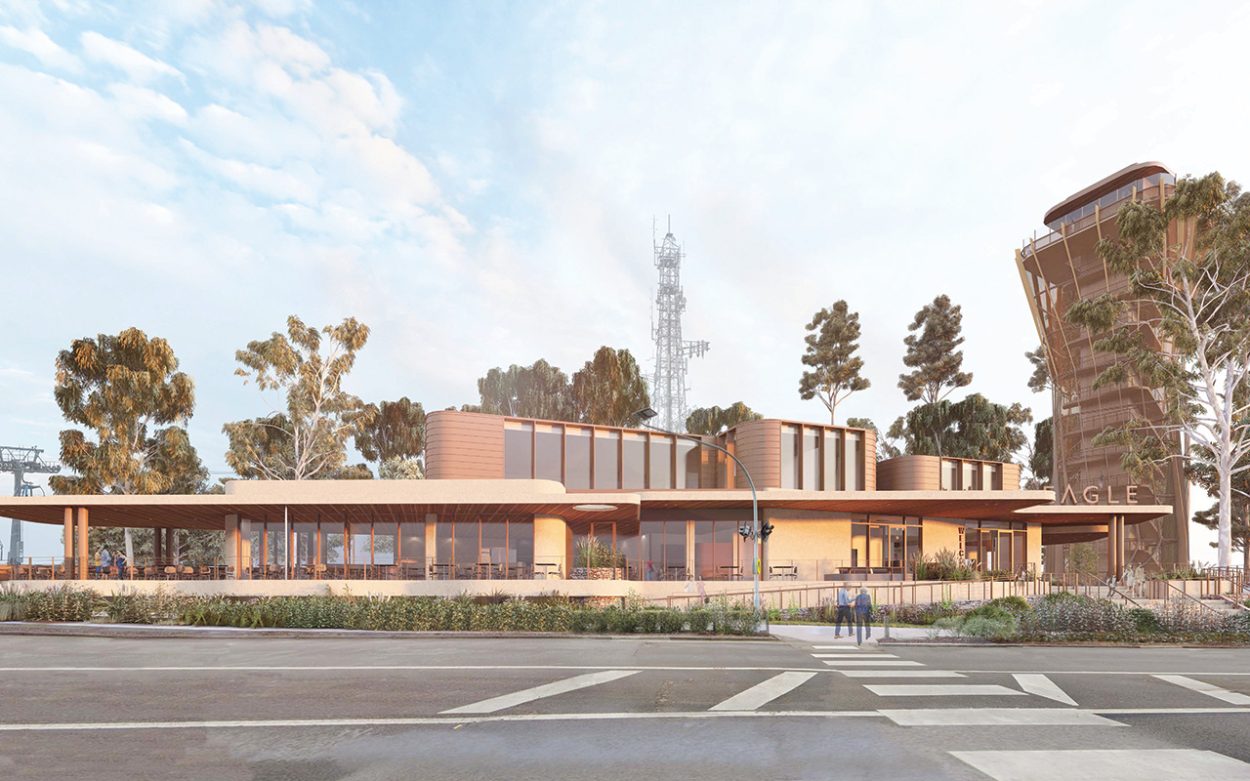
IT was disappointing to hear about council voting against an officer report and recommendation which sought to provide local government input into the proposed Arthurs Seat Eagle upgrade.
As people would be aware this development is being determined directly by the Planning Minister Sonya Kilkenny.
The Dromana Association is providing its own submission to the Minister.
In our view officers had put together a balanced report with a recommendation to object with concerns around some elements of the proposal; but was supportive of others.
This was the one opportunity the local government authority (Mornington Peninsula Shire) could put forward a position to the Planning Minister which could influence the decision.
Given the fact that local government has been bypassed as the relevant planning authority, with all deciding powers sitting with the Minister, we consider it particularly important that the council has a position; even if it is different to that of the officer’s report.
This is disappointing and in my personal opinion, whether through a lack of understanding and/or intent, this failure to arrive at a position is an abrogation of responsibility by the council.
The shire will not have any formal input into this development as a result.
While the three councillors whose wards abut Arthurs Seat/Wonga spoke in favour of the recommendation, the majority of those who voted against the recommendation did not. So, the community is at a loss as to their rationale.
It should be emphasised that the shire is one of many organisations and individuals who have been given the opportunity to respond to this final iteration within a limited time.
This fact also means that the shire has not been party to any negotiations around elements or conditions surrounding the proposal and like all of us would likely not have seen the final iteration in late October.
These negotiations will have occurred between the Planning Minister’s office, the proponent and other referral authorities.
This proposed expansion of the Eagle on public land is a significant one and regardless of different views of relative merits versus concerns, it is vital that community can expect their elected representatives to debate the item and come to a position. We are disappointed with the apparent lack of concern shown by the elected councillors to this important development proposal.
We are also frustrated that the amazing landmark of the Mornington Peninsula that is the Arthurs Seat/Wonga escarpment is not managed as a precinct; maximising amazing opportunities and minimising negative impacts. This is despite a council resolution and budget funds being allocated to undertake this exact process.
Simon Brooks, President – Dromana Association Inc