


INTERNAL communications at Mornington Peninsula Shire have indicated the rollout of Automated External Defibrillators (AEDs) across remoter areas of the peninsula may be driven by lack of effective ambulance coverage; a claim disputed by Ambulance Victoria.
Ambulance Victoria is believed to fall well short of its KPI target of “less than 15 minutes response times for 90% of incidents” for some remoter parts of the peninsula. Recent data across the entire peninsula shows that 60.1% of responses are achieved in less than 15 minutes, with the average response time 16 minutes and 11 seconds.
Ambulance branches are located in Sorrento, Rosebud, Hastings, Mount Martha, Mornington, Somerville. This leaves towns like Red Hill, Main Ridge, Shoreham, Flinders and Cape Schanck a considerable distance from the nearest station.
Attempts have been made to cover the shortfall in remote areas with a vehicle stationed at Main Ridge CFA in 2021 that was removed in 2022. Ambulance resources are placed at holiday hotspots like Flinders at “peak times”.
Shire advocacy after the removal of the Main Ridge service in 2022 stated “This critical service was fundamental in reducing the Ambulance response times for community members that live within the Red Hill Ward and Southern Peninsula communities”.
“We are seeking certainty that the removal of this important ambulance service will not compromise the health and safety of our community particularly in the Red Hill/Flinders area.”
Internal shire communications, obtained by The News, indicated a belief that the pro-active rollout of AEDs across these areas was pushing the first response responsibility from the state government onto community members rather than trying to improve ambulance coverage.
One of the communications stated “It could be argued that this is service transfer from state government”.
The issue came to a head after a private donation of 20 AEDs was made to the shire.
The shire communication stated that “Should Council choose to formally maintain the additional 20 donated units, the total cost over an 8-year lifecycle would be approximately $60,300 (around $7,537.50 per annum), plus servicing labour (subject to CPI). This would also result in an estimated $1,000 per year in additional officer time”.
Community clubs and organisations that are recipients of AEDs are currently responsible for the cost of servicing the machines, creating a financial impost.
The shire currently has a grants program “to provide quick funding for urgent, essential, one‑off community needs, including lifesaving and safety equipment such as AEDs/defibrillators”, but these funds do not cover the ongoing maintenance.
While there are over 150 AEDs registered on the peninsula, the shire doesn’t “take responsibility for all of the units even on shire land (i.e. sports clubs)”.
Shire figures indicate the cost maintaining all AED units across the peninsula could top $1m, and the best approach for the shire would be advocacy to the state government “so that they can appropriately service the [peninsula] according to their own KPI’s.”
Ambulance Victoria disputes the premise that the AED rollout is linked to ambulance response times, believing it is conflation of two separate issues and that ambulance response times are in no way linked to the availability and importance of AEDs in the community.
“Minutes matter in cardiac arrests, when a patient receives CPR and a shock from an Automated External Defibrillator (AED) before paramedics arrive, their chance of survival more than doubles,” said a spokesperson from Ambulance Victoria.
“For every minute CPR is delayed, cardiac arrest survival decreases by 10 per cent.
“We are urging the community to refresh their knowledge about CPR and how to use an automated external defibrillator (AED), and to step in and help someone in cardiac arrest.
“Every day, around 21 Victorians suffer a cardiac arrest but only one in 10 survive. Cardiac arrest can happen to anyone, anytime, anywhere, at any age, health or fitness level, and often without symptoms.
“Our message is simple – you don’t need to be a paramedic to save a life, just remember to Call (Triple Zero 000), Push (perform CPR) and Shock (use an AED).
“In 2024-25, when first shocked by a public AED, an incredible 63 per cent of cardiac arrest patients survived – almost two thirds – a huge increase from 47 per cent in 2023-24. Comparatively, only seven per cent survived when there was no bystander CPR or AED use.
“Recent data shows that 77 per cent of cardiac arrests happened at home, which is why learning Call, Push, Shock is so important – you could save the life of a loved one.”
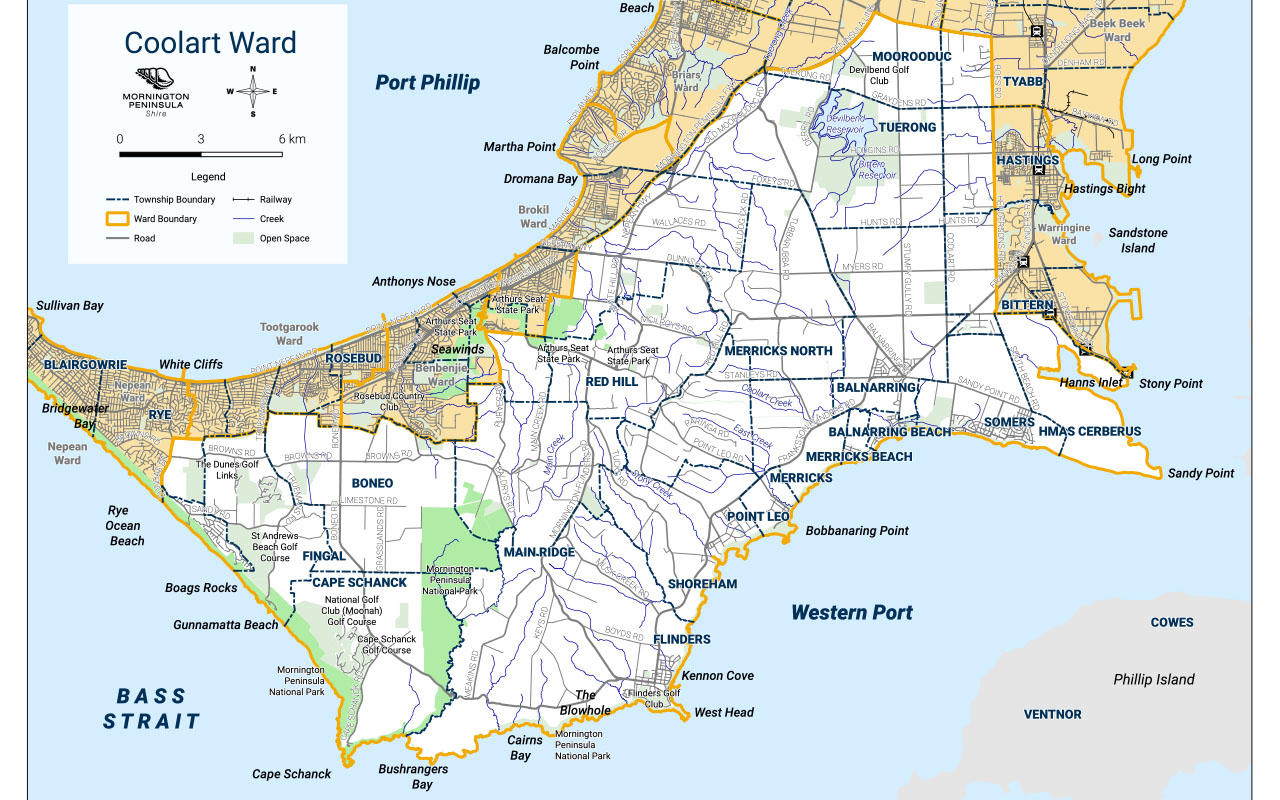
Cr David Gill, whose Coolart Ward covers the areas of Red Hill, Main Ridge, Shoreham, Flinders and Cape Schanck has written about the lack of timely ambulance services for his constituents.
“This comes back to cost-driven decisions by politicians,” said Gill.
“Ambulance Victoria and our first responders support increased services to our 42 separate peninsula communities and nearly eight million yearly visitors including those on our Western Port and hinterland where the extra travel rescue time is the main issue.
“The peninsula must have ambulance and paramedics available 24 hours a day meeting response times up to community expectations. Concerned citizens should write to state election candidates about this.”
A statement issued to The News from Mornington Peninsula Shire said, “Council has supported the rollout of publicly accessible defibrillators across the peninsula through community grant funding and partnerships with local organisations”
“Ambulance coverage remains the responsibility of the state government and we will continue advocating to ensure our community receives the services and funding we desperately need.”
First published in the Mornington News – 17 March 2026
