


MORNINGTON Peninsula ratepayers could avoid higher costs associated with the state government’s proposed four-bin waste system, after councillors voted unanimously to remove a glass bin rollout plan.
At their meeting on 17 March at Mount Eliza Community Hall, Mornington Peninsula Shire councillors considered how to implement the government’s waste reform legislation, which aims to standardise recycling and waste services across Victoria.
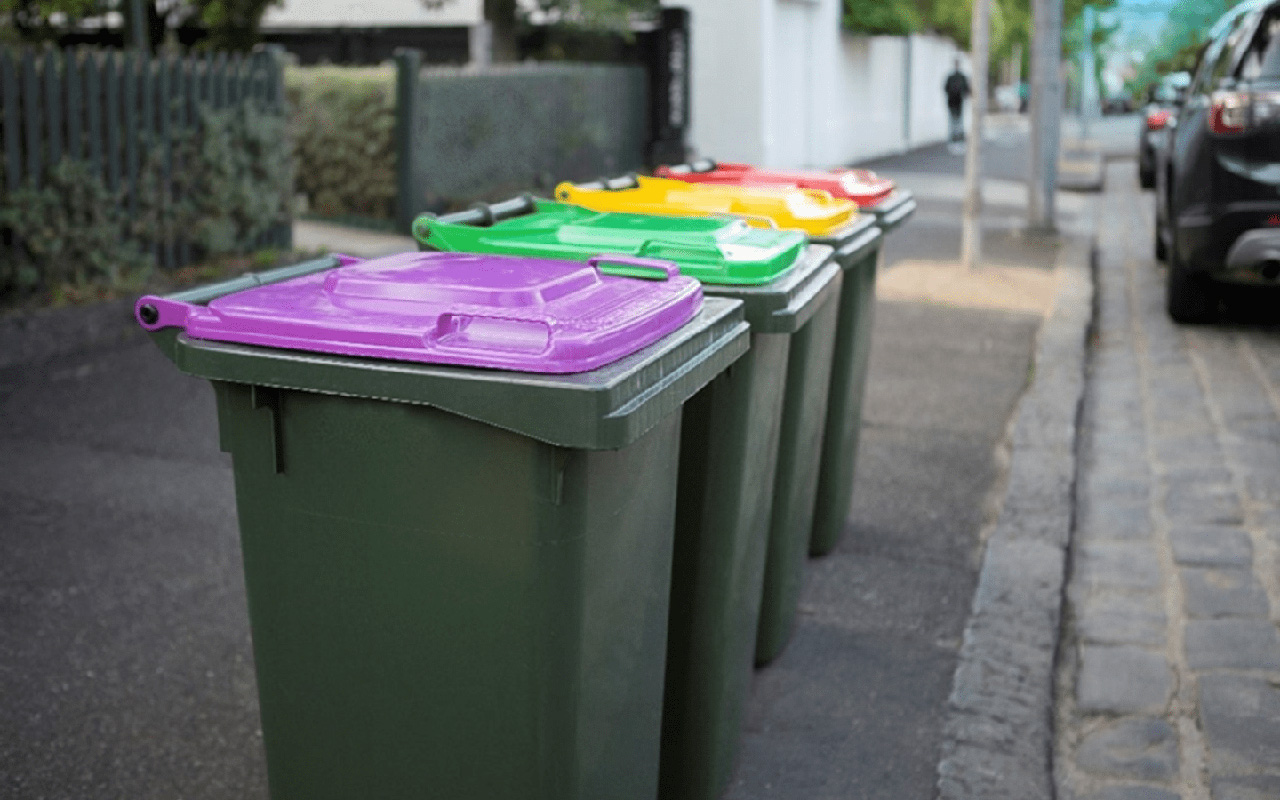
The full reforms would introduce a four-bin system with consistent lid colours across the state, designed to reduce confusion and improve recycling rates, including bins for general waste, mixed recycling, food and garden organics (FOGO), and glass recycling.
Victorian councils have been given 1 July 2027 as the implementation deadline, but the government has not legislated this requirement yet, and the shire stated, “there are still unknown details to the reform.”
At their meeting councillors voted to continue the mandatory FOGO and bin lid standardisation but would advocate to remove the mandatory glass bin requirement, adding a dedicated glass service would not be able to meet the 2027 deadline.
According to a council report, it’s estimated supplying bins and lids for a fully compliant system, including new purple-lidded glass bins for all households, FOGO bins for those not currently using the service, and updating non-standard bin lids, would cost around $8.5m.
Removing the glass bin from the rollout would reduce the capital cost to $4-4.5m and lower ongoing operational costs by $1.2m per year.
“Full compliance with the state government’s service reforms (including the glass bin) is estimated to result in an increase in the waste service charge of $55 to $70 per household per year,” a shire report stated.
“Partial compliance, as recommended in this report, would reduce ongoing operational costs by approximately $1.2m per year and result in an increase of $40 to $50 per household, including capital and ongoing operational costs.”
The shire also noted that glass containers were already recycled through the container deposit scheme and that a separate bin could impose unnecessary costs on residents.
Speaking at the meeting, Cr David Gill said removing the glass bin need would relieve the ratepayer hip pocket.
“The staggering cost is $8.5m to ratepayers – that’s at a time when we’re saying to everybody we need to watch how we’re going about these sorts of things and the cost of living,” he said.
“I think this is a bit of an unnecessary cost-of-living input onto our ratepayers because they have to pay for it. I believe there’s no longer a need for glass collection, especially if the state government extends the collection of recycled glass to more forms of glass.
“If we can save having four bins, I think our community would be much happier.”
Cr Kate Roper said, “our report shows some of these changes are impractical or impossible within the timelines, especially introducing the mandatory glass service”.
Currently, the council provides FOGO service to around 56 per cent of properties through an opt-in system, which removes food and green waste from the general waste stream.
Making FOGO mandatory would initially increase costs for households not currently opted in but may reduce costs for those who already pay for the service. Shire officers said a mandatory FOGO service had multiple long-term benefits.
With the closure of Rye Landfill in 2026, all residual waste will need to be sent off the peninsula, increasing disposal costs.
Another component of the reform is standardising bin lid colours. Many bins currently have dark green lids for general waste and light blue for recycling, which can confuse residents and visitors.
The council said aligning lid colours with state standards is expected to reduce contamination in recycling, saving the shire $1-2m per year in disposal costs.
Shire officers warned transitioning to a four-bin system (accounting for bin production, delivery, lid replacements, and community education) would take 18-24 months to implement.
Some neighbouring councils, such as Frankston, have already implemented the four-bin system.
First published in the Mornington News – 24 March 2026
