

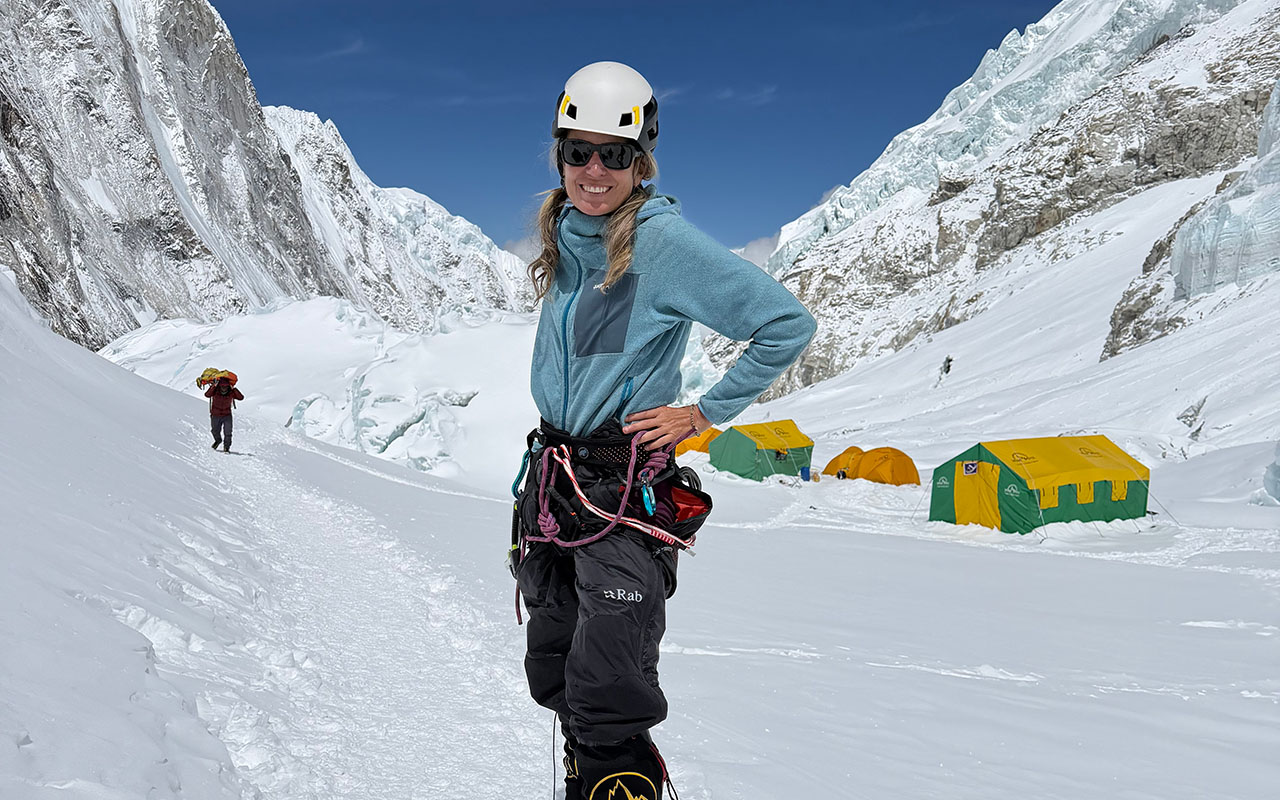
MORNINGTON’S Jennifer Willis became the first Australian with multiple sclerosis to summit Mount Everest.
Willis is a mother-of-three, coach, speaker, educator, and climber, who completed the trek to the highest summit in the world on 19 May.
She was diagnosed with multiple sclerosis in 2018 and decided she wasn’t going to let it stop her from doing what she loved: hiking.
“Everest was never a dream, but from when I was a little girl, climbing mountains was,” said Willis.
“And when I was told it looked like I might have MS, which was in 2008, I made a commitment to myself that if I ever did get diagnosed, I would follow that dream and climb mountains.”
In 2023, Willis attempted to summit, but due to a mishap with oxygen bottles, she was forced to retreat. She said going back this year was a matter of completing unfinished business.
This year, Willis completed the climb in a unique season. There was hanging ice which made it too dangerous for anyone to climb for two weeks, and then Willis contracted a virus which again slowed down the climb.
“By the time I was up at base camp again, it was three weeks later than you’d normally start your rotations up and down the mountain to acclimatise,” said Willis.
“So, we made the decision with my guide just to go up the mountain once and not do the rotations.”
Willis said she didn’t believe her chance of summitting was very high, but alongside her guide, Phunjo, she reached the summit at 2:35am on 19 May.
“When I was just before the summit, I sort of felt emotional,” said Willis.
“I was like, ‘Oh my God, oh my God, we’re at the summit at Everest.’ And I felt like I was about to cry, except my eyes were probably frozen, so I couldn’t.”
She said once she made it to the summit, however, it felt a little anticlimactic.
“I think because after such a massive build-up, suddenly you’re just… there,” said Willis.
“Standing on top of the world felt amazing in its own strange way, especially after my previous incomplete expedition, climbing with MS, getting sick this trip and everything that had been navigated just to reach the summit.”
The journey back down was even more difficult for her, as her eyes froze and she lost all depth perception.
“Standing at 8,848m, relying on bottled oxygen with a very long way to go to get back down is certainly a reminder of how vulnerable we are,” said Willis.
She said she’s waiting for her summit certificate to arrive, which might make the experience seem more real.
“I think living with MS, for me, feels like no matter what happens with my health, if my walking over time does get impacted or anything, I’ll always be able to look at that certificate and go, all right, that was me that achieved that,” said Willis.
Willis said her MS made the climb particularly difficult for a number of reasons, including temperature regulation, fatigue, and bladder control.
“In everyday life, my memory can really frustrate me and focus and things like that,” said Willis.
“But once I’m climbing, it’s so nice, because it’s like I can forget about some of that, especially on a guided climb. I love just relinquishing some of that mental responsibility for a period of time.”
Willis has written a memoir named How Far Would Go To Find Yourself, which she is planning to publish in the future. She also has plans to climb Denali in Alaska.
“My whole journey has just been taking one next step and each step that I’ve taken is with intention and mindfulness and a commitment to the direction that matters most to me,” said Willis.
Willis said she believes we get one life to live and it is important to take time to commit to your own dreams.
“You become a better, stronger person for it and ultimately end up with more to give to the world anyway, so do pursue those dreams,” said Willis.
First published in the Mornington News – 23 June 2026
