


ADVOCACY group Greater South East Melbourne (GSEM) is calling on all political parties to back targeted investment in better buses, roads and transport connections ahead of the state election.
GSEM, an alliance of eight councils and shires in the greater southeast region, is calling for a $100m Greater South East Bus Transformation program.
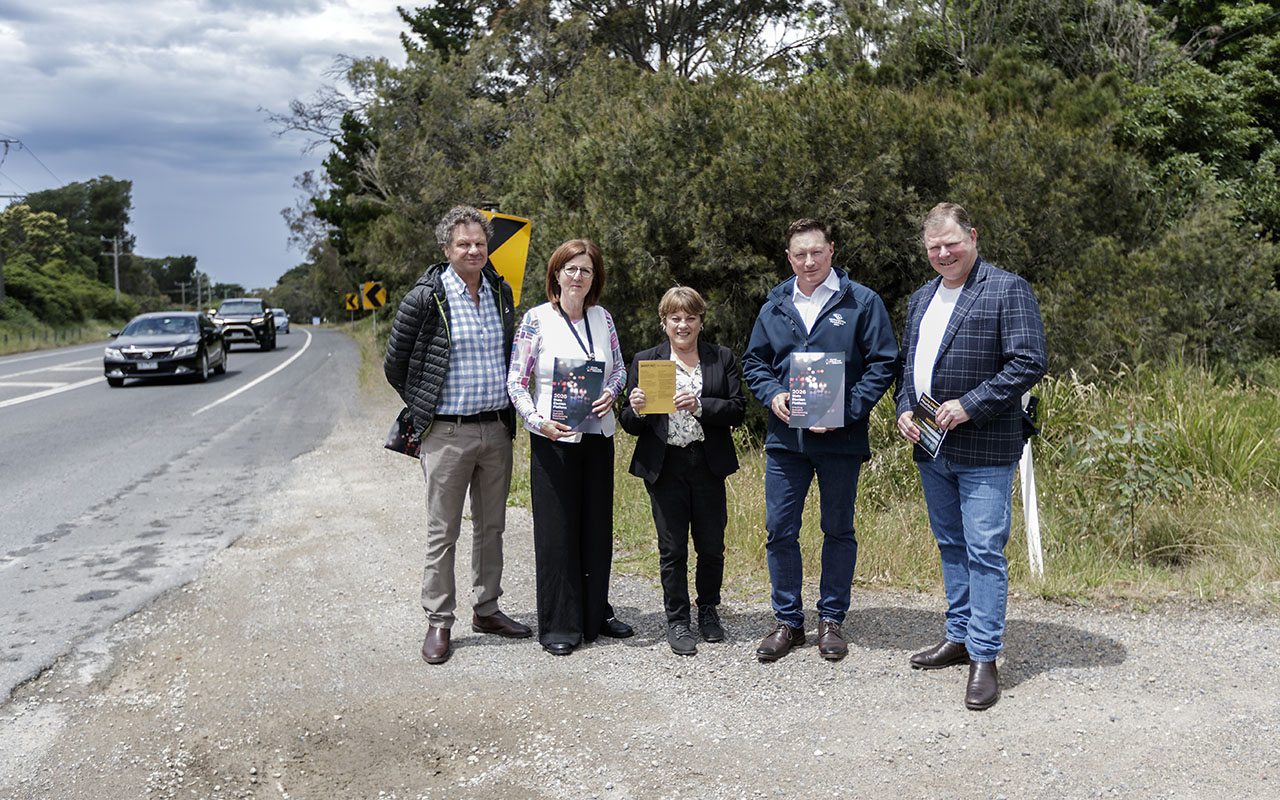
On 4 November, GSEM representatives gathered at a bus stop in Baxter, which sits along an 80kph strip of Frankston-Flinders Rd.
There is no shelter to wait for the bus service, and GSEM representatives said it is an example of where there needs to be more investment in local buses.
GSEM Chair Simon McKeon AO said investment in the GSEM transport network was essential for the growing region from both a logistical and cost-of-living perspective.
“Better buses allow people to save money on driving, which is increasingly important amidst mounting cost-of-living pressures,” said McKeon.
“We also know that when people and freight can’t move efficiently through our region, the impacts are felt more broadly across Victoria. We need targeted investment in key road corridors and better bus services so people can get where they need to go affordably, safely and reliably.”
He said the southeast has a network, but it is not fit for 2026 purposes.
Cr Paul Pingiaro said the multiple bus stops on the peninsula require better facilities in order for people to use them.
“People want jobs; they don’t want borders that are restricting their movement,” said Pingiaro.
“In a cost-of-living crisis, public transport’s the way to go, and unfortunately, the Mornington Peninsula has been left behind.”
Pingiaro noted the shire’s Shout Out campaign, which highlights a need for increased connectivity across the peninsula.
Mornington Peninsula Shire mayor Cr Stephen Batty said the issue is particularly important to local residents.
“The stop we are at today is a clear example of why investment in our local bus network and infrastructure is needed,” said Batty.
“At the moment, there is simply a sign beside a busy 80kph road. Council has previously received complaints about this stop, and we need to see better, safer infrastructure including a shelter which supports people to use public transport.”
Batty said they are also seeking reform of the Western Port bus network to be more direct, run hourly, and align with the Stony Point line service.
Daniel Bowen from the Public Transport Users Association said for many Melburnians, buses provide connections to the places they go, but service operating hours and frequency often mean they’re not a great option.
“Better public transport means more choices for people, allowing them to use the network more often for their journeys,” said Bowen.
“That gets cars off the road, helps household budgets, and can help ensure people have better access to opportunity right across Melbourne’s southeast.”
Recent GSEM research shows buses are already an important part of daily life for many people across Melbourne’s southeast, particularly younger residents.
Thirty-five per cent of respondents regularly travel by bus, rising to 67 per cent among 18- to 24- year-olds.
Among bus users, 25 per cent nominated cost savings as the top benefit.
For people who don’t use buses, around one in five pointed to gaps in routes, frequency, or journey times as barriers that could be addressed.
McKeon said delivering better bus services would require both political commitment and collaboration.
“We’re calling on all political parties to back this commitment and work with bus operators, the PTUA and other key stakeholders to get the investment right,” said McKeon.
“Bringing the right people to the table will help ensure investment responds to the needs of communities across Melbourne’s south east.”
First published in the Mornington News – 10 November 2026
