

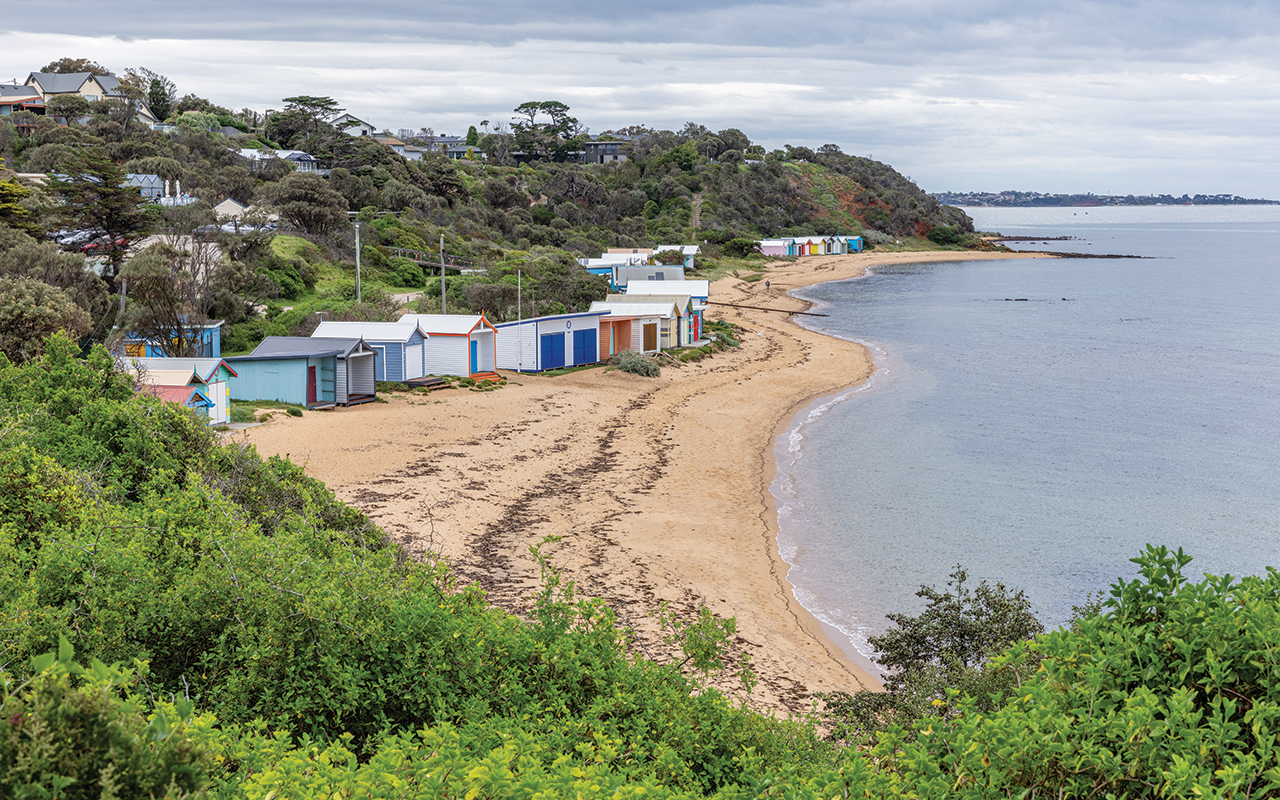
THE state government has rejected a Mornington Peninsula Shire application to mechanically rake beaches in areas with an endangered native plant, forcing a shake-up as planned works are scrapped in favour of hand cleaning.
The decision comes after councillors voted in May to reinstate mechanical raking on accessible beaches, covering about 80 percent of the beaches on Port Phillip Bay while hand-cleaning would continue at beaches unreachable by tractor.
But in a letter to the shire responding to its application to remove native vegetation as part of a mechanical beach cleaning program at Ranelagh Beach in Mt Eliza, Safety Beach, McCrae West, and Rosebud Beach, the Department of Energy, Environment and Climate Action (DEECA) refused a planning permit on the grounds that raking would result in the removal of the endangered Coast Saltwort plant.
The letter, seen by The News, stated, “DEECA is not satisfied the applicant has demonstrated sufficient efforts to avoid and minimise impacts to native vegetation”.
“There are feasible opportunities to avoid impacts on native vegetation, such as using hand cleaning to clean areas of beach where native vegetation is present based on field assessments of the location and distribution of the plants,” the letter, dated 31 October, said.
DEECA also noted in the letter that the shire’s separate application to seek consent for mechanical raking was also refused under the Marine and Coastal Act 2018 as the proposed works would be on marine and coastal Crown Land.
A DEECA spokesperson said the shire’s application was denied “as council has a manual raking program in place and vegetation removal was not required”.
“While mechanical raking is permitted on most Mornington Peninsula beaches, DEECA supports land managers to investigate alternative methods such as beach sifting machines or manual litter collection.”
Questions were put to the shire and some councillors about DEECA’s rejection, but neither confirmed the state’s decision.
Instead, it provided a statement from a shire spokesperson, saying, “We have been mechanically raking beaches that are accessible by tractor where there are no records of coast saltwort a native and protected flora species. Where Coast Saltwort, or other native vegetation is present and mechanical raking is not appropriate, our beaches are cleaned by hand”.
“We will continue to use a hybrid system of mechanical raking and hand cleaning across our beaches to strike the right balance between environmental protection and the visual cleanliness,” the spokesperson said.
“Not all beaches are the same and that’s why we’re able to use mechanical raking on some, but not others.”
In a statement, DEECA said it “recommended council continue to use the effective hand raking system already in place, rather than mechanical raking at the desired locations”.
“Council was also advised to engage with the community on the program and gain expert advice on vegetation types on these beaches,” it said.
Coast Saltwort is listed as endangered in Victoria and grows in fragile coastal dunes and saltmarsh areas.
Environmental campaigners have welcomed the state’s decision including resident Josie Jones, a vocal opponent of mechanical raking.
“DEECA’s refusal of the raking permits is an important outcome, made at the regional director level due to high community interest and the confirmed presence of endangered Coast Saltwort. Our observations were independently verified by ecologist Gidja Walker and other experts,” she said.
“It’s disappointing to see attempts by some councillors to discredit valid ecological data, as we saw previously with the hand-cleaning results. The community overwhelmingly supports hand cleaning because it works.
“If seaweed is a concern, council can follow the low-impact approaches already used successfully by other coastal councils.”
Jones also said community safety was the biggest concern with raking as it cannot pick up syringes which are reburied in the sand.
“The only time that it can pick up a syringe is if it’s caught up in something else like fishing tackle or seaweed but normally when it’s appearing in those areas, it’s only because it’s just getting caught in the natural systems.”
Jones noted she had also contacted DEECA about the presence of the Salsola Tragus flowering plant at Mothers Beach in Mornington as well as at Mount Martha and Rye beaches and how raking would be possible “when no permit was granted”.
“They advise me that they would be following up the council on their obligations and that they rely on the council to let them know where the species are. So now we potentially might have those beaches which cannot be raked either,” she said.
The issue of mechanical raking versus hand cleaning has become a heated topic about how to maintain pristine, usable beaches while protecting fragile coastal ecosystems.
Raking has long been standard practice along Mornington Peninsula beaches. However, critics argue it removes vital organic material, harms wildlife habitats, and buries litter rather than fully removing it.
A 12 month hand cleaning trial, running from July last year to June, sought to address these concerns while maintaining beach accessibility for the public.
But some residents currently remain frustrated including Rowan Clark who said Ranelagh Beach was looking “worse than ever” with washed up leaves, branches, timber, dead fish, and seaweed piling up from a nearby creek and reefs after not being mechanically raked since 1 July last year.
“It’s an absolute disgrace especially for ratepayers and beach box owners who pay to have beaches cleaned. We’re pushing the council to clean the beach every two weeks. It’s frightening going into summer – families have nowhere to sit now,” Clark said.
“We had raking on the beach for 15 to 20 years prior and it had never been a problem and nor did it go near the Coastal Saltwort plant. The Ranelagh Club is celebrating 100 years this summer with many activities on the beach and the beach should be in top order.”
According to Jones, hand cleaners are no longer able to clean above the high tide line follow council’s mechanical raking decision.
“Therefore, they will not be cleaning between beach houses anymore which is where a lot of the letter ends up and also where a lot of the litter originates from in the way of food containers, packaging, etc,” she said.
First published in the Mornington News – 2 December 2025
