

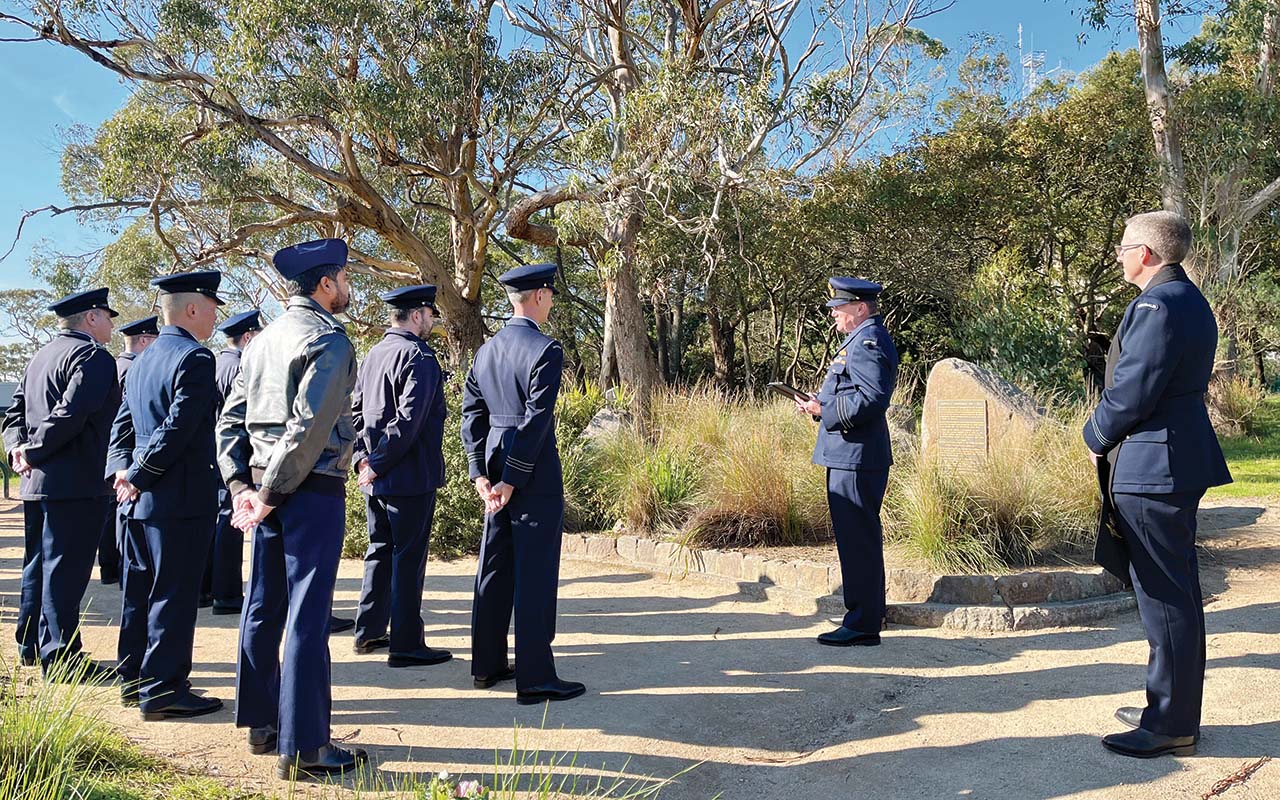
DEFENCE force personnel and dignitaries gathered last Friday (10 July) to commemorate the 84th anniversary of the loss of a Bristol Beaufort bomber that crashed on Arthurs Seat on 12 July 1942 with the loss of four crew.
The crash was not the first, as another RAAF aircraft, an Arvo Anson A4 crashed into Arthurs Seat four years earlier, on 10 August 1938, also with the loss of four crew, with one survivor.
Early on the morning of 12 July 1942, 100SQN Beaufort A9-64 launched from RAAF Laverton to conduct an anti-submarine patrol just off Philip Island.
In the three previous months, Japanese submarines had been operating between Newcastle and Wilsons Promontory had attacked 21 ships, sinking 11 of them.
Around 7am, the British twin-engine torpedo bomber was flying lower than usual in low clouds and mist when without warning, the peak Arthurs Seat in Dromana appeared out of the fog.
The pilot responded and hastily pitched the aircraft up. The summit of Arthurs Seat was narrowly missed. However, the pilot stalled and lost control of the aircraft, dropping into the densely forested area just south of Arthurs Seat lookout tower.
All four crew members in the plane were killed instantly.
They were Field Officer Robert Elcoate, 24, of Melbourne; Sergeant Dudley Merton Wehl, 22, of Capella, Qld; Sergeant James Robert Axon, 22, of Brisbane, Qld; and Sergeant Charles Martin Redgrave, 32, of Grafton, NSW.
The crashed Beaufort bomber was salvaged and scrapped for parts in August, not long after the crash.
A monumental plaque dedicated to all those who died in the two bomber crashes was unveiled and dedicated on July 12 1995, to mark the 53rd anniversary of the Beaufort crash.
In a speech given on Friday, Commanding Officer 100 Squadron Richard Brougham said, “The main focus of what we are here to do today is to acknowledge the loss of four young men who were prepared to take those risks and actions required of them by their country during a time of conflict, and in their case unfortunately making that ultimate sacrifice”.
“They are more than just four names on a memorial and like all of us had hopes and dreams of a long and fulfilling life which was taken from them.
“For us they are fellow members of 100SQN but for others they were sons, brothers, uncles, a father and dear friends for whom the ripples of their loss spread far and wide.”
First published in the Mornington News – 14 July 2026
