

Close Menu
  • Home
  • News
  • Sport
  • Entertainment
  • Local Lives & Landmarks
  • Contact Us
  • Advertise With Us
  • About Us
  • Subscribe
  • Read Our Newspapers Online
    • Read the Latest Western Port News
    • Read the Latest Mornington News
    • Read the Latest Southern Peninsula News
    • Read the Latest Frankston Times
    • Read the Latest Chelsea Mordialloc Mentone News
  • Competition
  • Home New
Facebook X (Twitter) Instagram
Friday, June 19
Facebook X (Twitter)
MPNEWSMPNEWS
  • Home
  • News
  • Sport
  • Entertainment
  • Local Lives & Landmarks
  • Contact Us
  • Advertise With Us
  • About Us
  • Subscribe
Breaking News
MPNEWSMPNEWS
Home»News»Ocean nomad arrives with a sting
News

Ocean nomad arrives with a sting

By MP News GroupDecember 2, 2019Updated:December 4, 2019No Comments2 Mins Read
Facebook Twitter LinkedIn Reddit Threads Email Copy Link
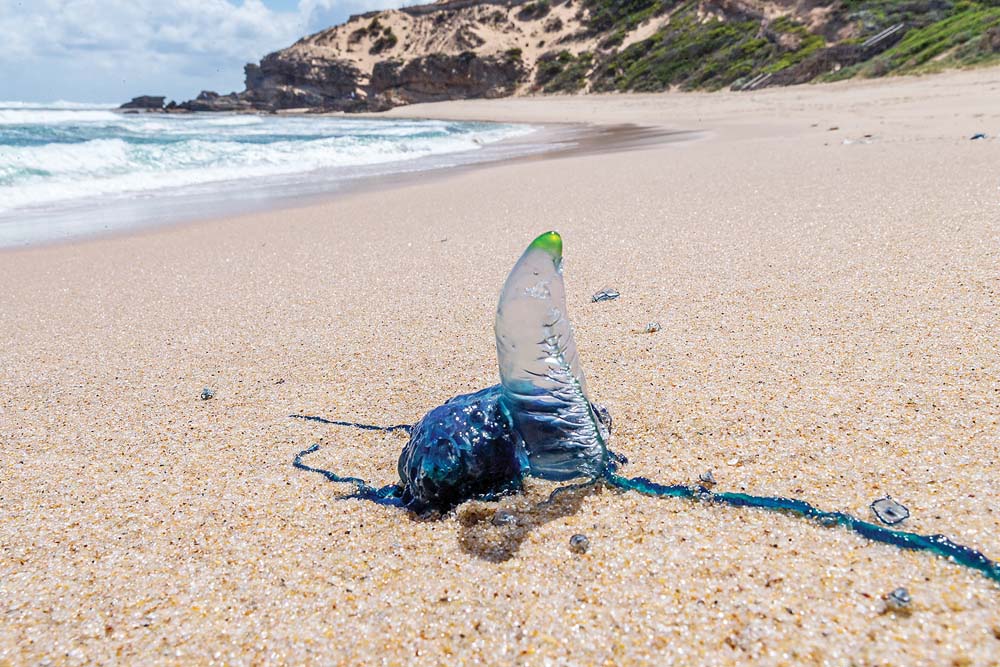
Step carefully: Bluebottles littered Sorrento back beach last week. Picture: Gary Sissons
Share
Facebook Twitter LinkedIn Pinterest Email
Step carefully: Bluebottles littered Sorrento back beach last week. Picture: Gary Sissons

ARMADAS of the stinging bluebottle jellyfish (Physalia utriculus) have been washed up on the Mornington Peninsula’s ocean beaches and may soon be entering Port Phillip.

The bluebottle, or Pacific man-of-war, is an occasional visitor to Victorian beaches but more common in Sydney and further north.

The wind and currents determine its journey before being brought ashore by incoming tides.

Wikipedia says bluebottles differ from other jellyfish in several ways. The gas-filled float supports a number of specialised tentacles, which are actually members of a complicated colony. The individual members, or zooids, cooperate to form what looks like one jellyfish.

Some zooids are specialised for stinging and capturing tiny fish and other marine animals, some eat the prey, while others reproduce.

Up to 30,000 stings each year are reported along the east coast of Australia from Physalia with about 500 reported from Western Australia and South Australia.

Treat a bluebottle sting by washing off remaining tentacles with saltwater and then rinsing the affected area with seawater to remove any invisible stinging cells.

Immerse the stung area in hot water as the heat kills the protein in the venom. Studies have shown that 40 degrees Celsius will produce relief after 10 minutes.

If the symptoms persist or for stings that cover a particularly large area, or across the throat and face, call 000.

First published in the Southern Peninsula News – 3 December 2019

Related Posts

Life-Gate offers hope in the heart of Frankston

June 19, 2026

AM honouree calls for kindness in healthcare

June 18, 2026

Community campaigns to recognise Tyrone Beach

June 18, 2026

Council renames climate group

June 17, 2026
Add A Comment

Comments are closed.

Peninsula Essence Magazine – Click to Read
Peninsula Kids Magazine – Click to Read
Letters to the Editor
Property of the Week

8 Birdwood Avenue, Mornington.

Property Of The Week May 19, 2026
Council Watch

Shire to pull out of aged care services

June 11, 2026

Ratepayers foot the bill for public waste costs

April 20, 2026
100 Years Ago This Week

Police Court Decision – Peaches not fruit

June 18, 2026
Menu
  • Home
  • News
  • Sport
  • Entertainment
  • Local Lives & Landmarks
  • Contact Us
  • Advertise With Us
  • About Us
  • Subscribe
About

Established in 2006, Mornington Peninsula News Group (MPNG) is a locally owned and operated, independent media company.

MPNG publishes five weekly community newspapers: the Western Port News, Mornington News, Southern Peninsula News, Frankston Times and Chelsea Mordialloc Mentone News.

MPNG also publishes two glossy magazines: Peninsula Essence and Peninsula Kids.

Facebook X (Twitter)
© 2026 Mornington Peninsula News Group.

Type above and press Enter to search. Press Esc to cancel.