


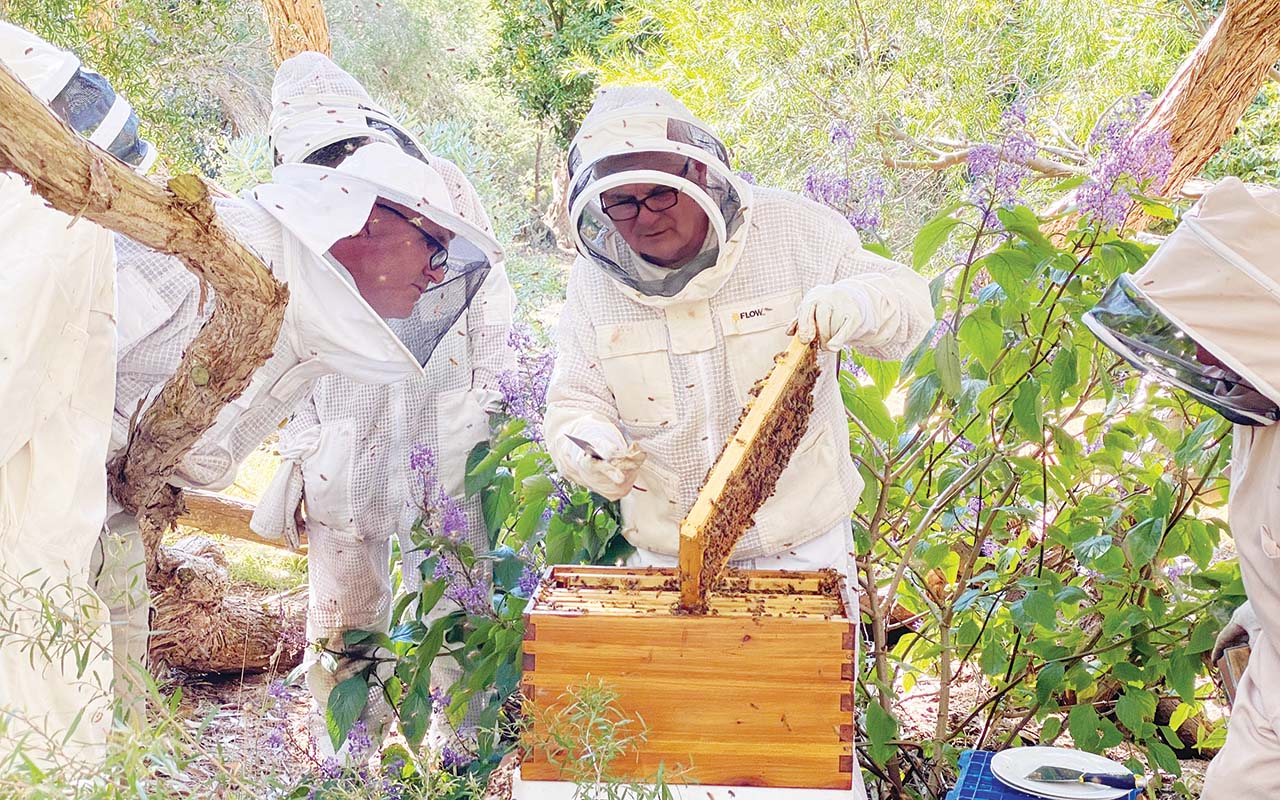
MORNINGTON Peninsula beekeepers are calling for a dedicated treatment site after the destructive Varroa mite was detected in local bee populations.
Mornington Peninsula Beekeepers Association (MPBA) has approached Mornington Peninsula Shire to request access to land where infected swarms can be treated and quarantined away from existing hives.
MPBA President Renato Pocci said the parasite has spread rapidly around the peninsula in the last month or so after arriving in Australia through a NSW port in 2022.
“It’s hit the Mornington Peninsula, to my knowledge, in the last probably month,” said Pocci.
“By this time next year, you imagine it’ll be everywhere.”
The Varroa mite feeds on bees and reproduces quickly within hives. They can spread disease among bee populations and weaken the colony to the point of collapse if left untreated.
Pocci said while it is not possible to eradicate the Varroa mite once established, it is possible to keep numbers low, maintain a healthy hive, and minimise impacts on honey production.
While members of the MPBA are trained in treating the Varroa mites, Pocci said they are facing a significant problem finding land to home the infected swarms.
The volunteer-run service collects swarms that are reported by council and residents which helps prevent bees from being destroyed and allows them to be rehomed with local beekeepers.
Infected swarms are unable to be taken to volunteers’ properties without risk of mites spreading to healthy hives.
“Every time they collect a hive now, they’ve got to take it back to their homes and they’re going to infect all their hives,” said Pocci.
“We need an area where we can actually put these hives so we can treat them and look after them away from other hives.”
Pocci said if they can’t find a suitable site, they may be forced to stop collecting swarms all together which could potentially mean the shire wouldn’t have any option but to exterminate.
Councillor David Gill said he has asked officers to investigate whether there is any land that could be suitable for the MPBA.
“Part of our responsibility is developing the resources and economics of the peninsula,” said Gill.
“This is one of those things where if we can help, I think it would be great.”
Gill said there are lots of beekeepers on the peninsula who make an income from honey production.
“You’re not going to control the spread now, it’ll just keep spreading,” said Gill.
“But what you can do is keep it to a minimum and allow honey production to be as good as you can still have it with Varroa mites.”
Beyond honey production, Gill and Pocci both emphasised the importance of bees as pollinators who support the production of fruit, vegetables and other crops.
The MPBA is open to considering both council-owned and privately-owned land for the site, provided it is isolated from other hives and suitable for treatment and quarantine purposes.
Residents with infected hives are encouraged to contact the MPBA, whose members can advise the best plan to help monitor and treat the mites.
First published in the Mornington News – 9 June 2026
