

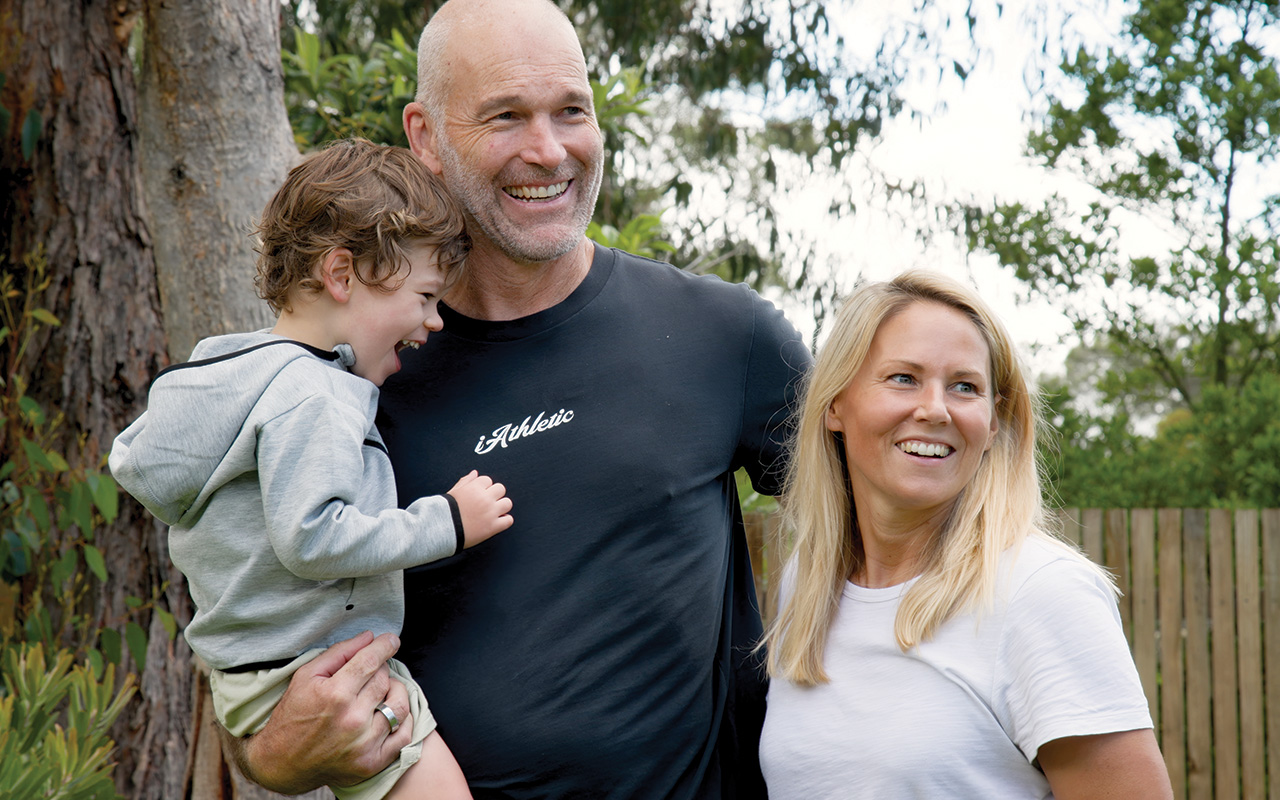
PAUL Maley didn’t give much thought to breast cancer, until a sleepless night three years ago changed everything.
The Mornington Peninsula-based former professional NBL player is one of the subjects of Conquering Breast Cancer, a new Australian documentary releasing in cinemas nationwide from 10 June, including at Village Cinemas Karingal on 21 June.
Presented by Melbourne filmmaker Sue Collins, the film weaves together survivor stories – including those of Olympic legend Raelene Boyle AM MBE, and First Nations mountaineer Kristal Kinsela – with expert insight from leading oncologists and researchers, asking whether Australia can rise to the challenge of ending breast cancer deaths.
Paul was 56 when he noticed something unusual while trying to get comfortable in bed one night in May 2023.
“I rolled on my left side and put my hand in my left armpit, and I felt something like an obvious hard bump,” he said.
“It obviously didn’t belong there, it was so foreign and different.”
He went to his GP the next day where the doctor suggested it could be a cyst, but referred him for an ultrasound. About a week later, driving home from work, Paul got the call that would alter the course of his life.
“I said, ‘Can’t you just tell me what it is?’ And he said, ‘I’d rather talk to you in person.’ And I thought, okay, this is not good,” he said.
Within two weeks he had undergone a biopsy and PET scan. The diagnosis was breast cancer, which had already spread to two of his lymph nodes.
“When you have somebody tell you that you definitely have cancer, it’s a huge dose of fear is what I would say,” he said.
The stakes felt enormous. Paul’s three adult children from his first marriage were already grown, but he and his wife had just welcomed a baby the previous November.
“The idea that I might not be there” for his young son added a new dimension to the fear, he said.
Treatment was immediate and intensive – surgery to remove the tumour and lymph nodes, followed by six months of chemotherapy and a month of radiotherapy. He now takes a daily medication to limit oestrogen in his body, as his cancer was oestrogen-driven.
Paul described chemotherapy as being like a slot machine, with symptoms including exhaustion, nausea, dizziness, headaches, dry mouth and peripheral neuropathy cycling through unpredictably.
“It’s like every three hours you had to pull the lever, and any combination of those could come up that would last for three or four hours. It could be all eight, you could be having a really bad day, or it could just be three,” he said.
His sporting background gave him a framework for getting through it. Paul came to Australia on an NBL contract and stayed, and 36 years later he still calls the peninsula home. He played 12 years in the competition, mostly with the now-defunct North Melbourne Giants before finishing his career with the Adelaide 36ers.
“The commitment to training, the commitment to a plan, dealing with adversity, and having to work back from things like injury and go through the different emotions and physical stresses – I would say that definitely helped,” he said.
On days when symptoms eased, he kept moving with short bike rides, walks, and even the occasional surf near his Somers home. His wife’s support, he said, was extraordinary.
“I had amazing support, my wife was incredible, and I had a terrific support network. I exercised, and I think I stayed for the most part positive,” he said.
Three years on, his health is good. His involvement in the documentary came after Paul shared his story at a Breast Cancer Network Australia (BCNA) event and later became an ambassador for the organisation’s Pink Lady match in partnership with the Melbourne Football Club in 2025, generating significant media coverage that caught the filmmakers’ attention.
According to the National Breast Cancer Foundation, around 1 in 600 men are diagnosed with breast cancer in their lifetime, and more than 40 men die from the disease each year in Australia. Paul wants those numbers to register.
“Don’t wait. If you feel something or something’s off, act immediately. I think I’m here because of that. It had already moved into my lymph nodes, so if I had waited even a little bit, maybe I’m not here in this conversation,” he said.
“And for those who are presented with the challenge, trust the Australian medical profession, all the support that is available, and attack it. Go into it with the most positive mindset you can, and allow yourself to be supported by your loved ones.”
Conquering Breast Cancer is the third instalment of Moonshine Agency’s Conquering Cancer series, following Conquering Skin Cancer and Conquering Cervical Cancer.
The film opens nationally on 10 June and screens at Village Cinemas Karingal on 21 June. For more information visit conqueringbreastcancer.com.au
First published in the Mornington News – 9 June 2026
