

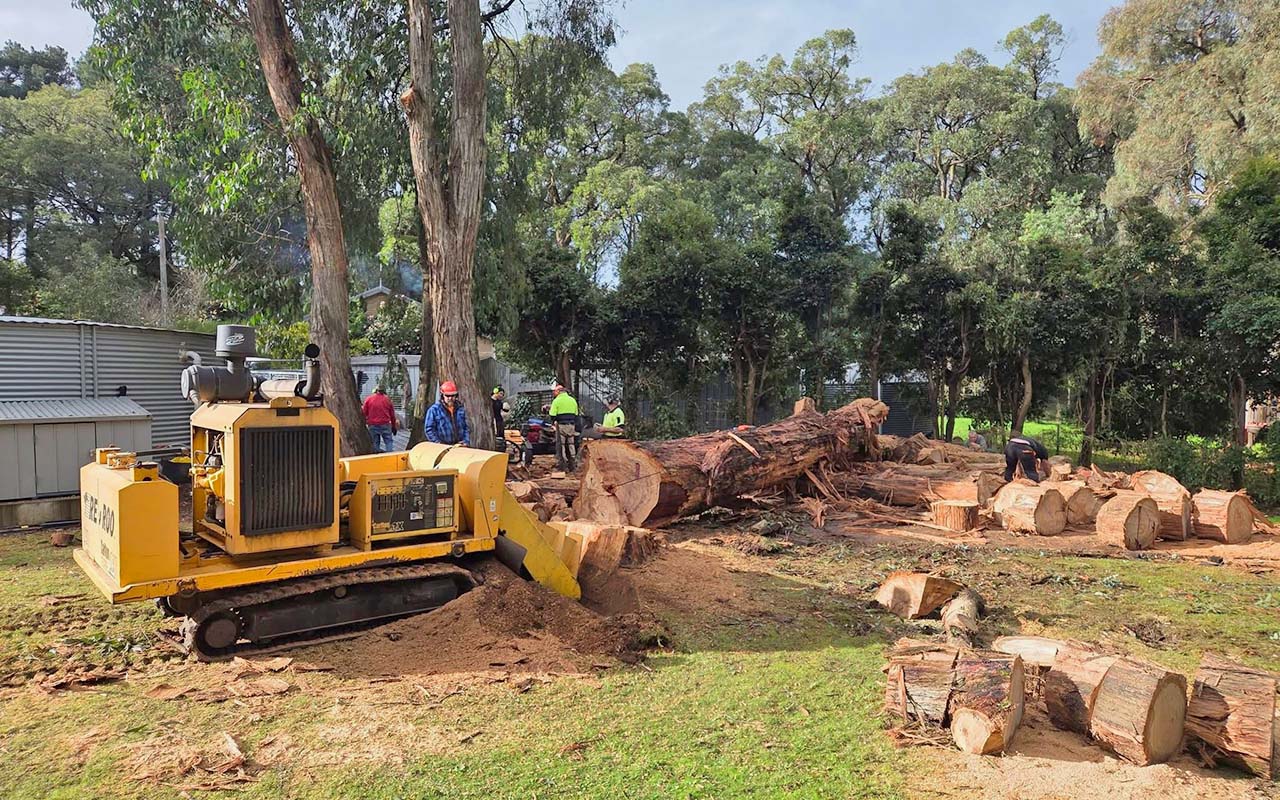
CONCERNS have been raised over two 100-year-old trees that were cut down in Red Hill to make way for a CFA shed.
Grant Roberts said he was participating in a Nature Stewards program in June at the Red Hill Mechanics Hall, when the group noticed a tree had been cut down on the neighbouring CFA site.
“We were in a position to estimate the diameter of the tree. Among us were those with the knowledge to identify it as a eucalypt of 100+ years, despite it being stripped of its foliage,” said Roberts.
“We have since understood that the felled tree was a Messmate, and that perhaps two had been cut down.”
Roberts said Messmates are indigenous to Red Hill and can live for hundreds of years.
He said he reached out to the shire and requested an explanation.
“I was told the shire approved an application from the CFA to remove the two trees to make way for a shed,” said Roberts.
“This is despite the Mornington Peninsula Planning Scheme showing the CFA site (21 Mechanics Road) is subject to a Significant Landscape Overlay, SO1 and a Vegetation Protection Overlay, VPO1.”
Roberts said the loss of “such magnificent trees” should not pass without an explanation as to why.
“Even the protections of these two environmental and landscape planning overlays couldn’t save the Messmates,” said Roberts.
Roberts noted the shire’s website, which states “Trees matter on the Mornington Peninsula – The Shire is taking a proactive approach to tree management”.
“If that is so, then we need to know why the Mornington Peninsula Shire did not protect these old native trees and why overlays failed to prevent the destruction of high-value environmental assets,” said Roberts.
Andrew Pomeroy, Director Planning and Liveability at the shire, confirmed the CFA application met requirements for council’s approval and was supported by an assessment from a qualified arborist.
“The permit requires wildlife specialists to safely manage any fauna that may be found,” said Pomeroy.
Roberts said the loss of the two Messmates has cost the community habitat for animals, storage of up to three tonnes of carbon with their biomass, and continued offsetting of tonnes of carbon dioxide.
“Did the shed really need to go in that spot?” said Roberts.
“Surely a solution could have been found that did not involve this level of destruction.”
First published in the Mornington News – 13 October 2026
