

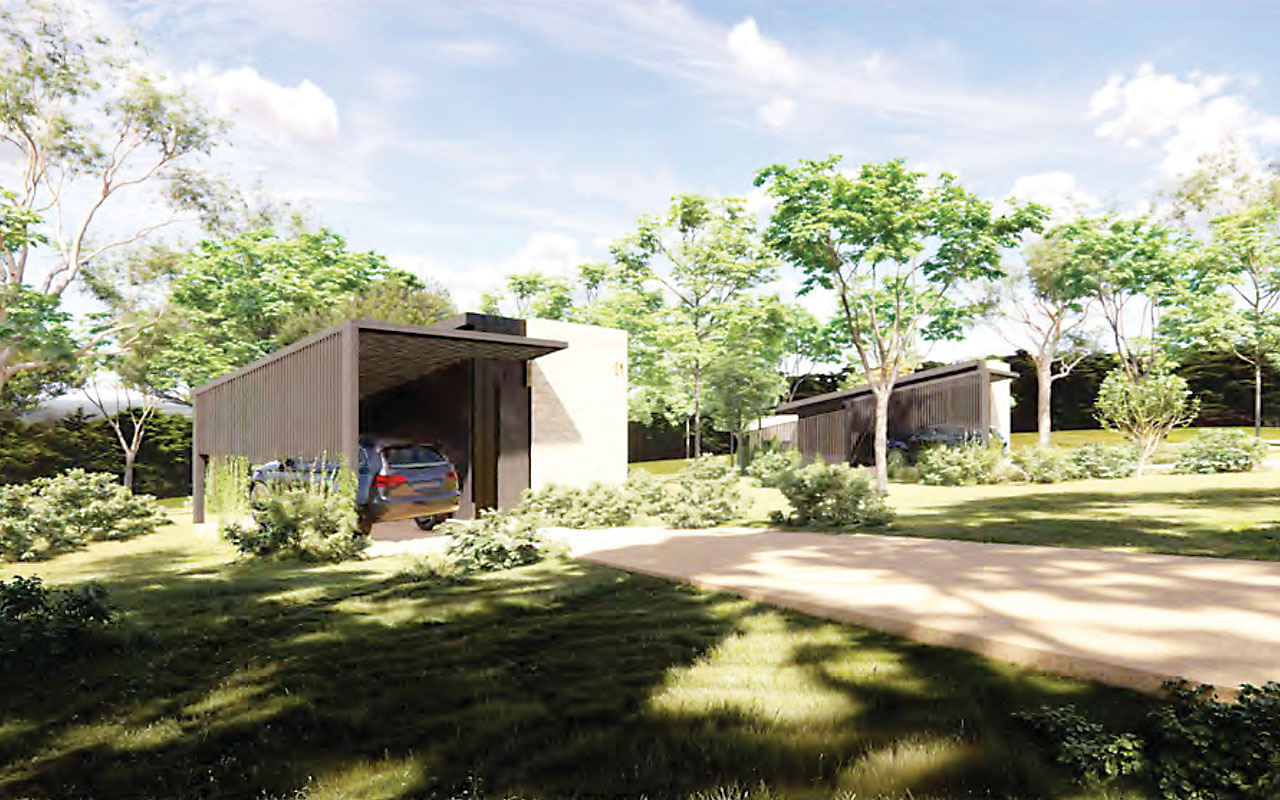
MORNINGTON Peninsula Shire has approved plans for a new host farm accommodation development at Green Olive at Red Hill.
Councillors voted 8-1 at the 12 May council meeting to support the planning permit application for the “Green Olive Escape Host Farm Accommodation” proposal.
The development includes four accommodation villas, a 56 panel solar system, extensions to the existing gravel access track, and the removal of 36 trees. The approval of the permit is subject to strict conditions relating to wastewater management, vegetation protection, biodiversity offsets, and bushfire management.
Cr Stephen Batty, who moved the motion, said the proposal “represents far more than simply four accommodation villas”.
“It’s about supporting a genuine working farm on the Mornington Peninsula and recognising the important role agritourism plays in the long term sustainability of farming within our green wedge,” said Batty.
He said the farm has helped place the peninsula on the “nation and international tourism map”, attracting between 30,000 to 40,000 visitors per year while employing seven full-time staff and up to 30 casuals in peak periods.
“That level of visitation and economic activity provides substantial benefits not only to the business itself, but to the broader Mornington Peninsula economy through tourism hospitality and local employment,” said Batty.
He said the plan is a thoughtful approach that balances tourism with the viability of agriculture.
“The ability to provide on-site accommodation is essential to delivering a true immersive and holistic farm experience,” said Batty.
“In my view, the proposed accommodation is not simply an addition to the farm, it’s a necessary component of a sustainable agritourism business model that supports regional tourism, local employment and the ongoing preservation of family farming traditions.”
Cr David Gill opposed the motion and said it highlighted broader issues with host farm developments on the green wedge.
“This is a continuation of host farms as an opportunity to have accommodation in the green wedge on viable farmland through loopholes in the planning scheme,” said Gill.
He also raised concerns regarding Melbourne Water’s objection to the proposal and the environmental impacts associated.
“The proposal will have an unacceptable impact on biodiversity values,” said Gill.
Cr Michael Stephens said he appreciates the “detailed consideration given to the issues raised by Melbourne Water” and noted the importance of all concerns being properly addressed as part of the assessment process.
Stephens also expressed concerns regarding vegetation removal, emphasising council’s responsibility to carefully examine any removal of native vegetation. He said he felt conflicted as the proposal does technically fulfill the necessary requirements and therefore would likely be unsuccessful if challenged.
Cr Patrick Binyon said he initially had concerns regarding the “loosely worded” definition of the host farm but ultimately backed the decision due to the confirmation that villa three would be constructed to universal accessibility standards.
“Accessible tourism is one of the fastest growing sectors in Australia,” said Binyon.
“Universal design benefits everyone- not only people with disability, but older Australians, parents with prams, people recovering from injury, and visitors with temporary mobility challenges.”
Cr Max Patton said the proposal highlighted the need for a broader review of green wedge planning controls.
“I think we need to consider the strategic pathways for getting better outcomes on the green wedge,” said Patton.
Under the approved permit, the accommodation can only operate while agricultural activities continue on the property. The development remains subject to a 28-day appeal period and must meet a range of planning, environmental, and building permit conditions before construction can begin.
First published in the Mornington News – 26 May 2026
