

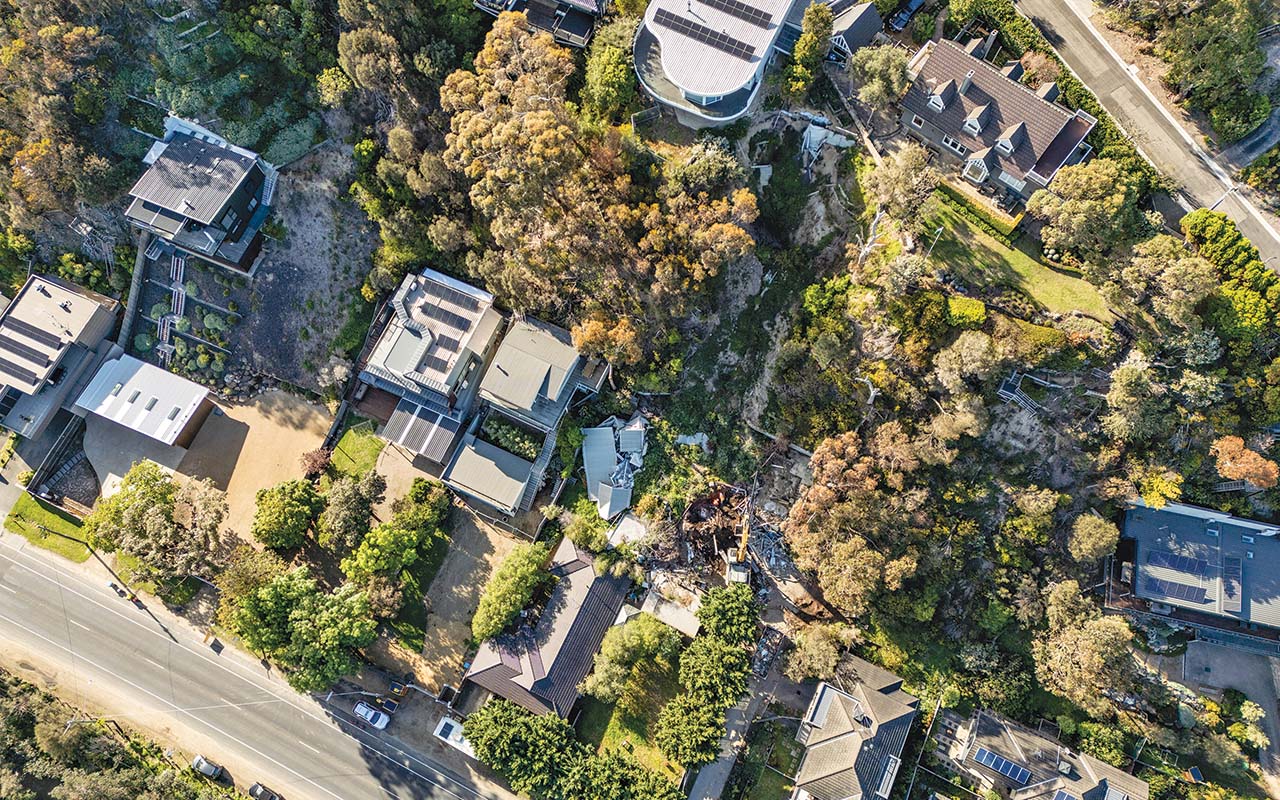
The board of inquiry’s report into the McCrae landslide of 14 January this year has been released, finding the landslide, which destroyed a house and injured a council worker, was due to a burst water main owned by South East Water (SEW).
Two years earlier, in November 2022, two landslides occurred in the same area. Nine days before the January 14 landslide, on 5 January, a smaller landslide occurred, damaging the back of the property. The report said, “given the history of landslides in McCrae, and the impact on the community, it was time to find the answers”.
Inquiry chair Renée Enbom KC’s report found the burst water main was located 450m south of the destroyed property, near the corner of Bayview Rd and Outlook Rd. Prior to its repair on 31 December 2024, the water main leaked 40.3 million litres of water undetected; the equivalent to approximately 16 Olympic-sized swimming pools.
In the months leading up to the landslide, McCrae residents reported concerns and complaints about water in the area. It was creating potholes, flowing down streets, bubbling up through the roads, and saturating nature strips.
The shire and SEW each took steps to try and address the water issues. The report said, “while each organisation invested resources and time, they operated in siloes, missing valuable opportunities for collaboration and co-ordination.”
The report deemed the shire and SEW did not respond with the urgency necessary considering the situation, even though they were unaware the concerns were due to a burst water main. “Neither appreciated the seriousness of excess water accumulating in an area adjacent to a steep escarpment with high susceptibility to landslides,” the report said.
The location of the burst water main was difficult to find, but once discovered on 30 December, was repaired the following day. The board said they could not confirm whether the delay in locating the burst water main contributed to the landslide or not, but that it “may have contributed”. They also said the fact the shire and SEW did not take steps to intercept the water flow and direct it away from the site after the 5 January landslide “may have contributed”.
The report concluded the shire did not share information with SEW regarding the high landslide risk in McCrae and that overall “landslide risk was, and is, largely forgotten”. It does not feature in the State Emergency Management Plan (SEMP), the Southern Metro Regional Emergency Management Plan, or the shire’s Asset Management and Strategy and Stormwater Asset Management Plan. It also does not feature in SEW’s procedures for detecting leaks. “This must change,” the report said. “Landslide risk cannot be ignored. The consequences can be devastating.”
The Shire and South East Water have commenced a comprehensive review of their operational practices and are actively considering adjustments informed by insights gained from the incident. There will need to be substantial works carried out including the use of engineered rockfill, which will take significant time and money.
Several risk reduction measures have been recommended to the shire, SEW, and the Victorian government, which will require continued effort over the coming years. These include educating the community, assessing water infrastructure, the review of emergency management plans, and implementing an Erosion Management Overlay, which is a planning tool designed to address landslide risk.
The board has recommended the shire review and improve its processes for responding to landslide and water incidents, as well as the approach taken by the shire’s McCrae Landslide Incident Group. It was also recommended the shire continue to progress its works planned to assess and mitigate landslide risk in the McCrae area.
“The shire generally accepts the findings of the report and is already progressing a number of the recommendations,” mayor Cr Anthony Marsh said in a statement. “The Shire is willing to participate in the mediation process (Recommendation 2) and looks forward to discussing the detail.”
The board has recommended SEW’s new managing director review and improve the approach taken by their strategy group, as well as calibrating its alarms in landslide susceptible areas. They have recommended SEW clearly document its leak detection procedures and processes and review them to ensure they are appropriate to address risk in areas susceptible to landslides. SEW was also recommended to progress its work developing systems and processes which connect multiple complaints to potential water leaks.
The board recommended the Victorian government develop a project to address data gaps on landslide risk and explore how this data can be made widely accessible. They have also recommended the government strengthen the management of landslide risk within the land use planning system to make sure residents of areas with high landslide risk have confidence there are planning controls in place.
The government has also been recommended to develop guidance materials which clarify the roles and responsibilities of councils, residents, and building surveyors regarding landslide mitigation works.
The report highlighted the importance of recognising the residents of McCrae who have dealt with uncertainty and stress during this time. There has been a mechanism recommended which will assist all relevant parties to progress the mitigation and remediation works.
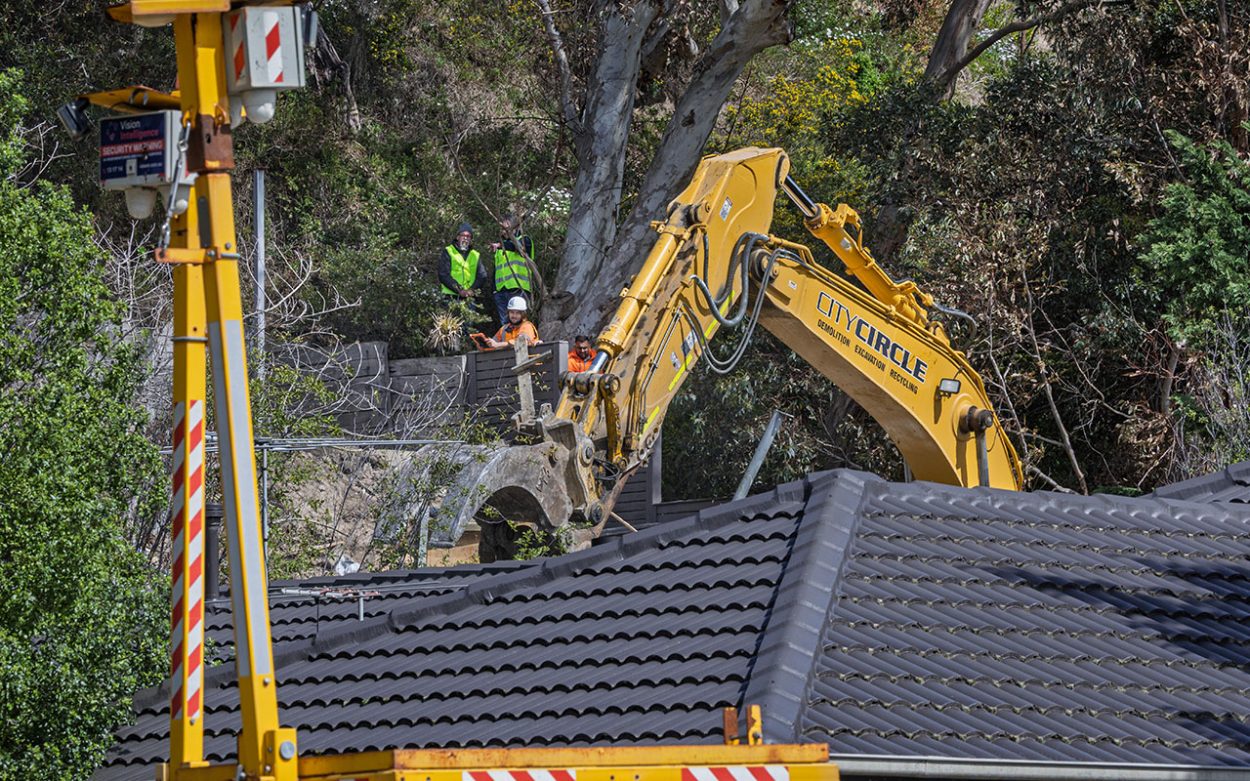
“The hope is that this will result in residents returning home sooner and the shire and SEW being able to turn their focus to broader landslide risk mitigation activities required in McCrae,” the report said. “This has been an incredibly difficult time for the residents impacted by the McCrae landslide and we will continue to work closely with them,” said Marsh.
“Community safety remains our highest priority and despite the inquiry wrapping up, our dedicated team continues to focus on getting the remaining residents safely back into their homes where possible.”
The report said McCrae residents should be able to feel safe moving forward, something they “both need and deserve”.
