

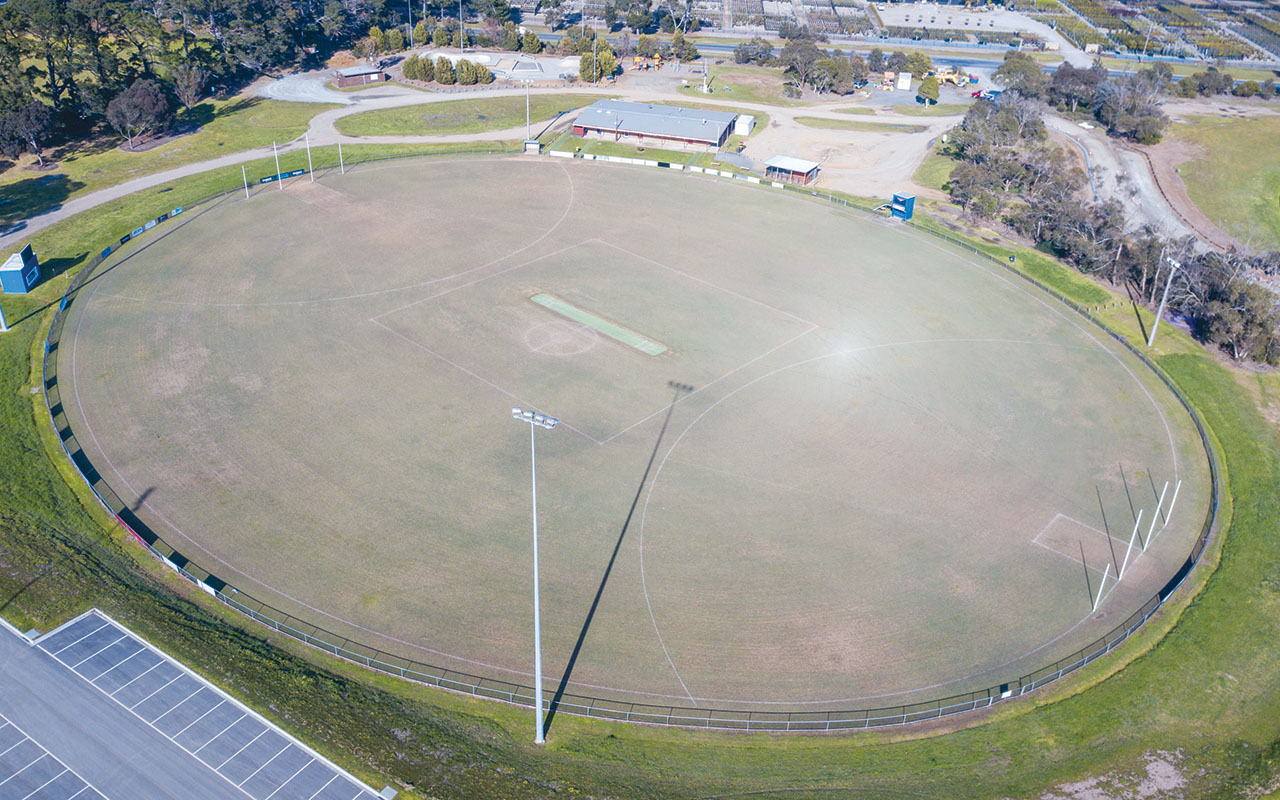
MORNINGTON Peninsula Shire council have voted to switch designs for the proposed redevelopment of the Western Pavilion at Emil Madsen Reserve after escalating construction costs.
At the 12 May council meeting, councillors voted 7-3 in favour of proceeding with a revised “option two” concept and abandoning the previously endorsed “option three”, which was backed by council earlier this year (Mt Eliza set for ramped-up pavilion, The News 23/02/26).
The decision was a result of recommendations from council officers after investigations found the expanded pavilion proposal no longer financially viable despite funding contributions from tenant sporting clubs.
Under the revised decision, council will continue design work on a scaled-back pavilion which will feature four AFL-sized changerooms and expanded social facilities. Plans for additional changerooms and larger community spaces proposed under option three will be removed.
Cr Stephen Batty, who moved the motion, said the revised proposal reflected the current financial climate while addressing growing demand at one of the peninsula’s busiest sporting precincts.
“This is not about prestige or having the biggest house in the street or the flashiest car in the carport,” said Batty.
“It’s about meeting basic and undeniable community need.”
Batty said in an ideal world, option three would be the best option for players and the broader community, but they are not operating in an ideal world.
“We are now operating in a climate of rising costs and financial pressure and leadership means being realistic and therefore the responsible path forward is option two,” said Batty.
“It’s not an indulgence; it’s an overdue investment.”
Funding for the design of the pavilion is part of stage 1 of the Emil Madsen Reserve Plan, which the federal government committed $15m to in 2024.
Council officers reported that the updated cost planning undertaken since February revealed major increases in construction expenses due to fuel and material costs.
According to the report, revised April 2026 estimates show option two costing $14.02m and option three costing $15.19 million.
Shire officers confirmed “there continues to be a significant funding gap required to deliver the project”.
Three councillors opposed the revised direction, with Cr David Gill concerned the project is receiving disproportionate investment while other sporting clubs on the peninsula continue to operate without adequate facilities.
“The other clubs that they compete against cannot compete because they don’t have those facilities, they don’t attract the players,” said Gill.
“They become a club that is on its own and that’s where it’s all wrong. It’s just gone wrong somewhere.”
Gill said council should ensure “equitable and consistent provision of sporting facilities” to all peninsula clubs and that this is not the case.
“It’s got to come to an end at some stage we can’t just keep making a super club because the next club that becomes a super club, there’ll be the two of them playing and you won’t need the rest because everyone will be in the two clubs,” said Gill.
Cr Kate Roper was concerned the decision involved additional council spending; however, officers confirmed any additional costs associated with revising option two would fall into the existing federal grant and have no impact on the council’s budget.
Cr Michael Stephens said he originally supported the more modest option one proposal because of concerns about financial risk to both council and ratepayers if community contributions failed to materialise.
“I’m comfortable upholding the standard pavilion model because once council moves away from that benchmark, every future pavilion discussion risks becoming unnecessary complex, more expensive, and harder to manage,” said Stephens.
He added that unresolved issues around maintenance responsibilities, lease arrangements, and compliance requirements still posed “a significant grey area and ongoing risk to the council”.
Cr Bruce Ranken said he supports the recommendation because option 2 provides a “feasible and deliverable pathway within the confirmed funding”.
“This isn’t about choosing between projects. It’s about progressing the one that is ready, funded, and deliverable,” said Ranken.
Officers will now undertake a formal value management process with tenant clubs to refine the final design within the approved funding before returning to council for final consideration.
First published in the Mornington News – 19 May 2026
