

VICTORIA’S largest co-operative housing provider says areas like the Mornington Peninsula are no longer immune from Australia’s worsening housing affordability crisis.
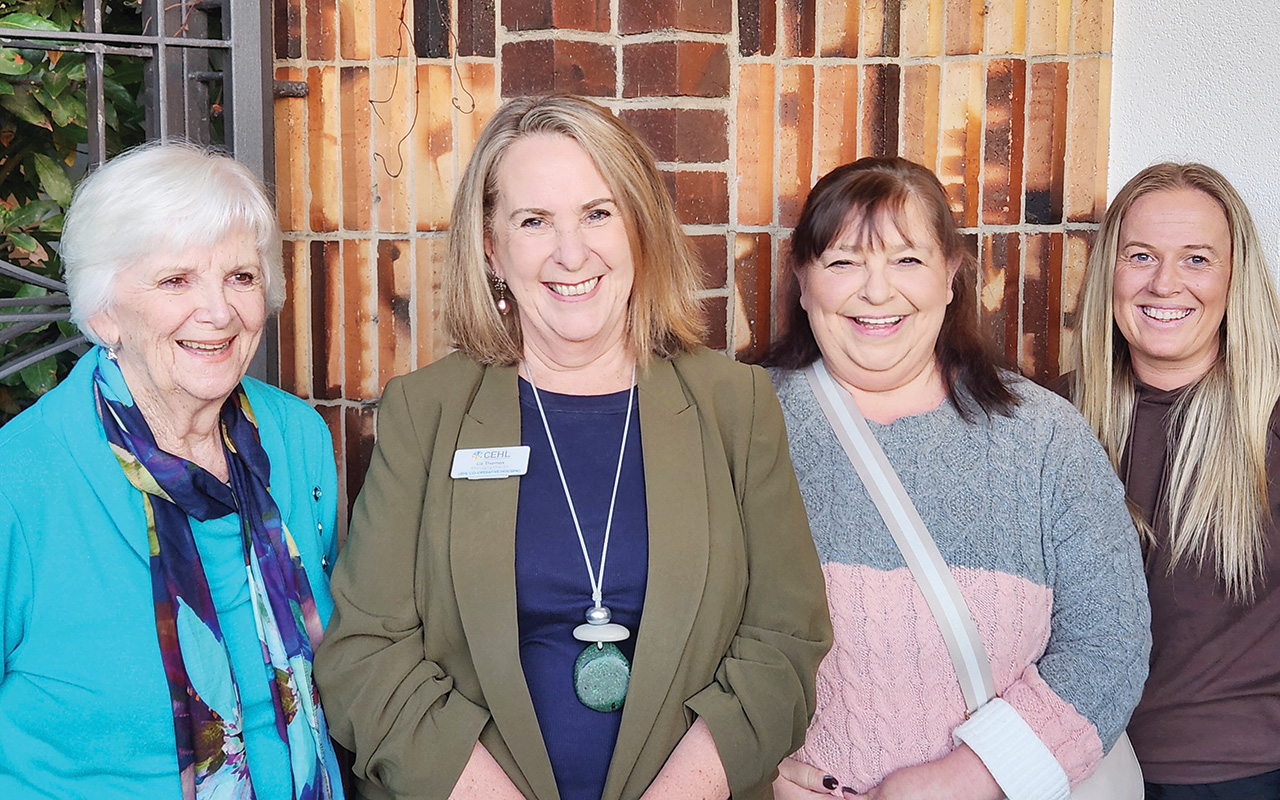
Liz Thomas, managing director of Common Equity Housing Limited, visited Rosebud on 14 May to meet with local housing co-operatives and promote co-op housing as a long-term solution for renters struggling to secure affordable accommodation.
Thomas said regional areas that were once considered more affordable than metropolitan centres are now facing many of the same pressures.
“I think that lack of supply is impacting regional areas now in the way it’s generally been limited to metro areas,” said Thomas.
“That’s put an increasing strain on the affordability of properties across regional Australia, including Victoria.”
CEHL manages more than 2000 properties across Victoria through more than 90 housing co-operatives. Across Frankston and the Mornington Peninsula, there are around 100 properties managed by six co-ops.
The co-operative housing model differs from traditional renting because residents are actively involved in the management of the property. In return, rent is capped at 25 per cent of household income, which is lower than the 30 per cent charged by many other community housing providers.
“The discount from 30 to 25 per cent is what we call a sweat equity discount,” said Thomas.
“So, because you’re involved in supporting the management of the properties you live in, your rent is cheaper.”
Unlike private rentals, where tenants often face uncertainty due to short-term leases, the co-operative housing model offers ongoing tenure for members who remain active within the co-operative.
“Your tenancy continues for as long as you’re a member of that co-op and that removes that uncertainty that a lot of people experience in the private rental market,” said Thomas.
Demand for the model is high, with waiting lists stretching up to 10 years. Thomas said the biggest challenge is supply.
“We’re lobbying for an increase in supply, and that’s what the cry is across Australia – we need more housing,” said Thomas.
Housing co-operatives currently make up less than one per cent of community housing across Australia. Thomas, who is also chair of the Australian Co-Operative Housing Alliance, said the organisation would like to see co-ops accounting for 10 per cent of Australia’s community housing.
“We need to look at how do we provide secure, affordable rental housing for people who, even with a five per cent deposit, can’t enter the housing market,” said Thomas.
“It does need government to acknowledge it as a part of a broader housing sector, community housing sector, and to fund it basically.”
Thomas welcomed some areas of the recent Federal Budget, particularly measures designed to encourage the construction of new homes, but said a gap remained for long-term renters.
“Our concern is what we call the missing middle,” said Thomas.
“If you’re not eligible for public housing and you can’t afford to own your own home, either immediately or at any time in the future, where do you fit?”
She said older renters, part-time workers, and people on lower incomes were increasingly vulnerable in the renting market.
Thomas said there is opportunity for expansion on the peninsula, with local co-operatives keen to attract younger families and grow their membership.
“We’re really keen to work in partnership with local government in the region, because housing is not just a federal government responsibility, it’s a state government responsibility, and it’s a local government responsibility,” said Thomas.
“Local government have parcels of land in the area that could be available for development, and they need to start thinking about what sort of community do they want to create?”
Thomas said public support is key to driving political action on affordable housing.
“Politicians will respond to what they sense the public is asking for,” said Thomas.
“The more we can get people to understand there is an alternative to the private rental market that puts people in charge of managing their own housing and delivers them affordable, permanent rental accommodation, the closer Australia will get to realising home ownership is only one part of the solution to our housing crisis.”
First published in the Mornington News – 19 May 2026
