

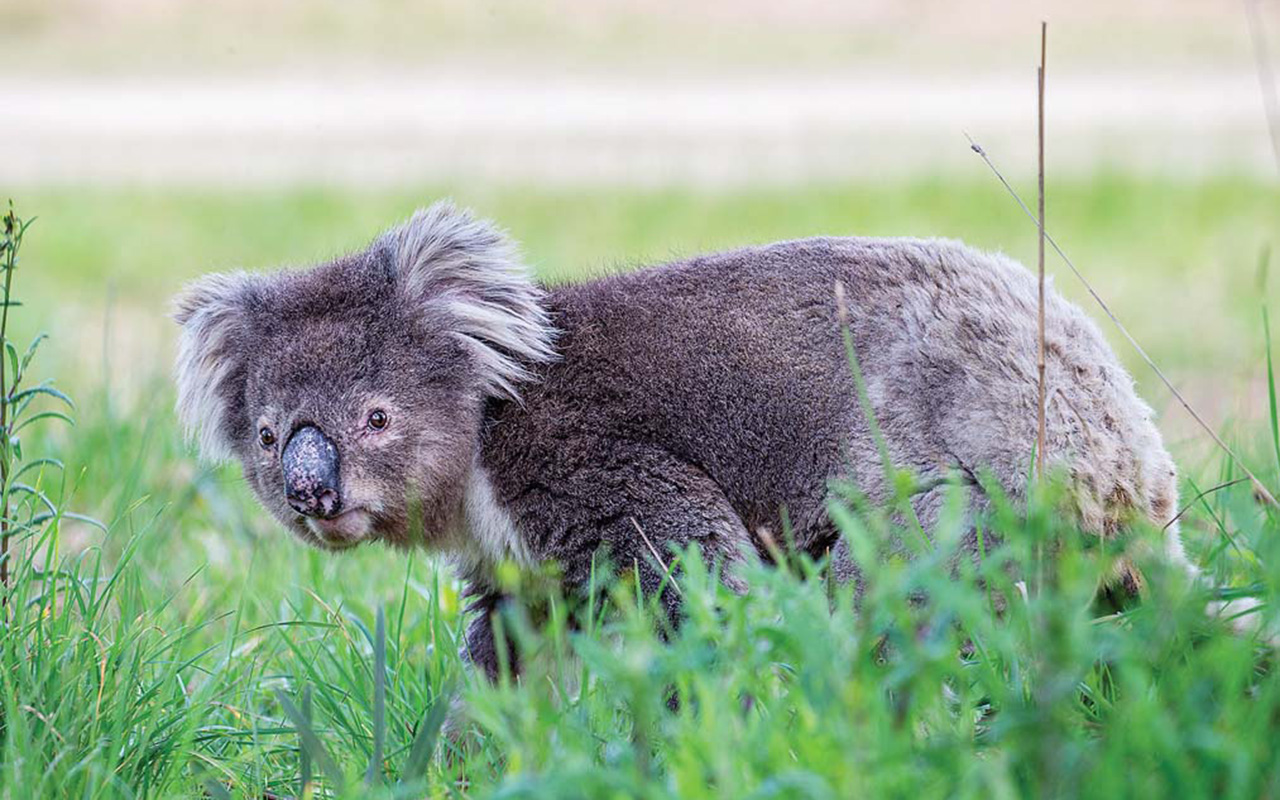
MORNINGTON Peninsula Shire council has voted to work towards a Wildlife Master Plan for the peninsula amid increasing concerns about habitat loss and wildlife protection.
At the council meeting on 12 April, councillors unanimously supported a motion from Cr David Gill calling for a report on the best path towards a Wildlife Master Plan, investigation of options for a wildlife hospital, and long-term advocacy to address the wildlife road toll on the peninsula.
The motion comes following the proposed sale of more than 1100 hectares of largely remnant indigenous vegetation of Cerberus Defence Land, which Gill said heightened the urgency of wildlife protection due to habitat loss.
“It’s a serious issue,” said Gill.
“We are seeing a high toll at the moment, and we certainly notice it with koalas, we are losing our koalas for a number of reasons.”
He said sightings of koalas on the peninsula have become increasingly rare.
“When you take a visitor, it’s getting very difficult. I used to be able to say, ‘I’ll show you a koala’ and now I just hope that we find one,” said Gill.
“We don’t want to get to the stage of what happened to wombats and emus. When I was a kid, they were running around the peninsula, and they’re all gone because they weren’t protected.”
The motion seeks framework for a Wildlife Master Plan that could help guide conservation priorities and support advocacy after Gill said the state government has shown no inclination to provide a wildlife plan for the peninsula.
Gill said local conservation groups and kangaroo protection groups have already undertaken work on conservation management plans and could help shape future community consultation.
A major focus of the debate was the strain on local wildlife carers. Gill said the option for a wildlife hospital, or clinic, is to help relieve the strain on volunteers whose homes are full of animals.
Cr Max Patton noted that during the fires around 2018-2019, Wildlife Victoria had a big boost in funding due to the focus on wildlife during those times, which helped wildlife carers, but that the funding is now running out and is not sustainable.
“[Wildlife carers] are really, really stretched and they can’t take an extra animal just about,” said Patton.
“There is a real need for a wildlife clinic or hospital down here.”
He said while vets do usually take in native animals, they are often euthanised, and a wildlife clinic or hospital could help resolve that issue.
Patton also said the wildlife road toll issue is not just about protecting animals but also about protecting public safety.
“By mitigating [the wildlife road toll], we also improve human safety outcomes on roads,” said Patton.
“It’s also the mental health impacts on people who do strike animals. The people are usually distraught and that can have lasting impacts on them and their children.”
This decision signals growing momentum for stronger wildlife protection measures on the peninsula, including consideration of roadside virtual fencing, improved wildlife signage, increased grant funding and stronger community partnerships.
“This is a way to ensure that our grandchildren and future generations get to enjoy the peninsula like we have,” said Gill.
First published in the Mornington News – 19 May 2026
